
Table of Contents
A New Financial Mechanism for a Growing League
The National Women’s Soccer League took a significant step toward reshaping its financial landscape with the introduction of the High Impact Player Rule, a new roster mechanism designed to help clubs attract and retain elite talent in an increasingly competitive global market.
Announced on December 23, the rule allows each NWSL club to exceed the league’s established salary cap by up to $1 million for high impact players.
That figure will grow annually alongside the base salary cap, giving teams long-term flexibility while maintaining the league’s hard cap structure. The additional allotment can be used on a single player or split among multiple players, though any contract using the rule must account for at least 12 percent of the base salary cap.
Eligibility for high impact status is determined by a set of commercial and sporting benchmarks, including recognition in global awards, national team minutes, or recent NWSL honors. Among those criteria is being named an NWSL MVP finalist or earning End of Year Best XI First Team honors within the previous two seasons.
Why the Rule Matters in a Hard-Cap League
For the NWSL, the rule represents a significant financial commitment. Beginning in 2026, league-wide player spending could increase by up to $16 million annually, with as much as $115 million in additional compensation invested over the duration of the current collective bargaining agreement.
According to Commissioner Jessica Berman, the goal is to ensure NWSL clubs are better positioned to compete for the world’s top players while preserving competitive balance.
That balance has long been central to the league’s identity.
The NWSL remains the only premier women’s soccer league operating under a hard salary cap, a model that has produced parity and consistent competition but has also left clubs vulnerable when facing interest from Europe’s top teams. The High Impact Player Rule is an acknowledgment of that challenge and a step toward addressing it.
Naomi Girma’s Exit and the Limits of the Old System

For San Diego Wave FC, the timing of the rule inevitably invites reflection on one of the most consequential departures in club history.
In January, Naomi Girma left the Wave to join Chelsea in a record-breaking transfer that reportedly exceeded $1.1 million, making her the first women’s soccer player to command a seven-figure fee. Girma was under contract through 2026, which required a transfer fee and drew interest from several European powerhouses, including Lyon, before she ultimately moved to England.
Her departure highlighted the financial limitations NWSL clubs face under a hard salary cap. Even with Girma firmly established as one of the best center backs in the world and a cornerstone of both the Wave and the U.S. women’s national team, San Diego had few mechanisms to counter the spending power of Europe’s elite. While the transfer fee provided value in return, losing a generational defender underscored the growing pressure on NWSL teams to retain top-tier talent.
The High Impact Player Rule may not fully prevent similar departures in the future, but it does provide clubs with new flexibility to invest in players who meet elite performance benchmarks.
Delphine Cascarino Fits the High Impact Profile
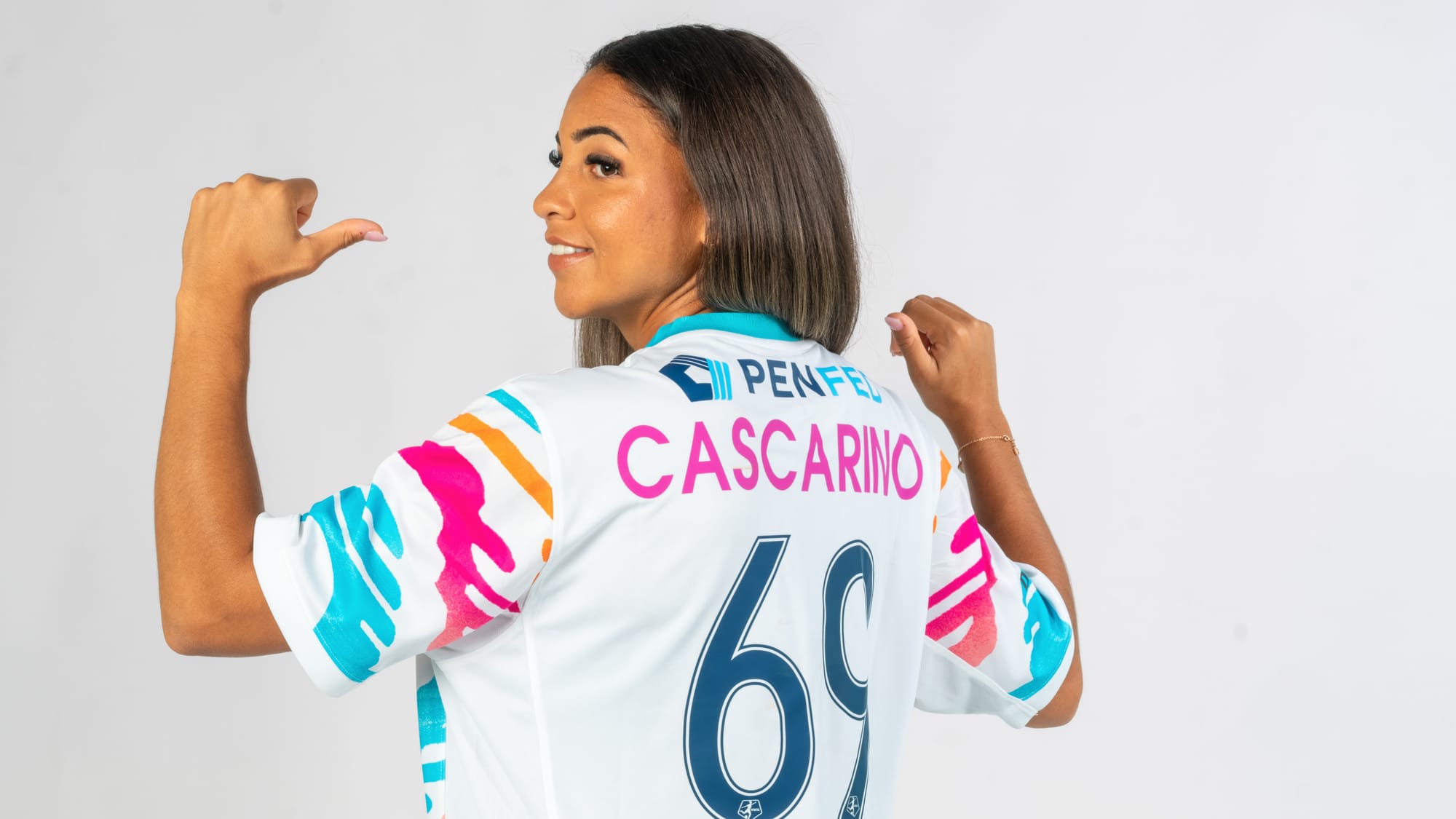
On the other side of that equation for San Diego is Delphine Cascarino, whose 2025 season placed her squarely within the new rule’s framework. Cascarino was named an NWSL MVP finalist, which automatically qualifies her as a high impact player under the league’s criteria.
In her first full season with the Wave, the French international delivered one of the most productive attacking campaigns in club history. She finished the regular season with five goals and six assists, becoming the only NWSL player in 2025 to reach that mark. Cascarino led San Diego in assists, tied for the team lead in goals, and ranked highly across expected assists, touches, and shots.
Beyond the numbers, her influence was consistent and decisive. Cascarino recorded the second-most goal contributions in a single season in Wave history and repeatedly created advantages in the final third with her pace and creativity.
Standout performances, including a brace against Racing Louisville in April, reinforced her match-winning ability. Her club form carried over internationally as well, where she emerged as one of France’s most dynamic players at the UEFA Women’s Euro.
What the Rule Means for the Wave Moving Forward
Under the new rule, players like Cascarino represent exactly the profile the NWSL is seeking to retain. For San Diego, the High Impact Player Rule offers a pathway to invest more heavily in a player who has quickly become central to the club’s attacking identity and long-term vision.
Taken together, these developments illustrate a league in transition. The High Impact Player Rule does not erase the structural gap between the NWSL and Europe, but it narrows it.
For San Diego Wave FC, the rule reflects lessons learned from losing Naomi Girma while creating new opportunities to build around elite talent already in place.
Looking ahead, the Wave’s challenge will be balancing flexibility with foresight. How San Diego chooses to deploy its high impact resources, whether to secure core contributors like Cascarino or pursue additional top-end talent, will shape the club’s roster strategy as the league enters its next financial era.