Table of Contents
San Diego FC has spent much of the second half of the season talking about learning from mistakes, responding to adversity and putting together a complete 90-minute performance.
With six matches remaining, the time for learning is quickly running out.
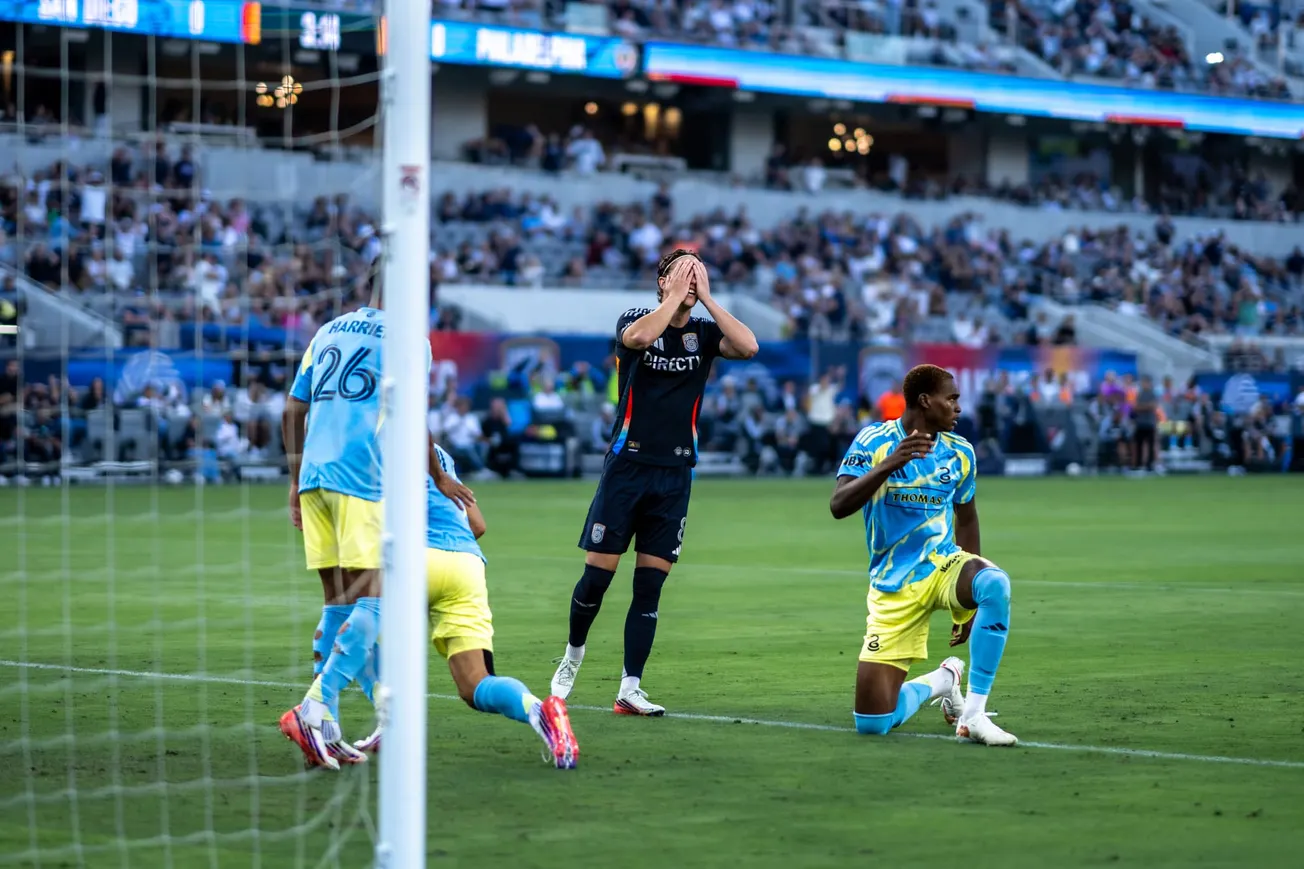
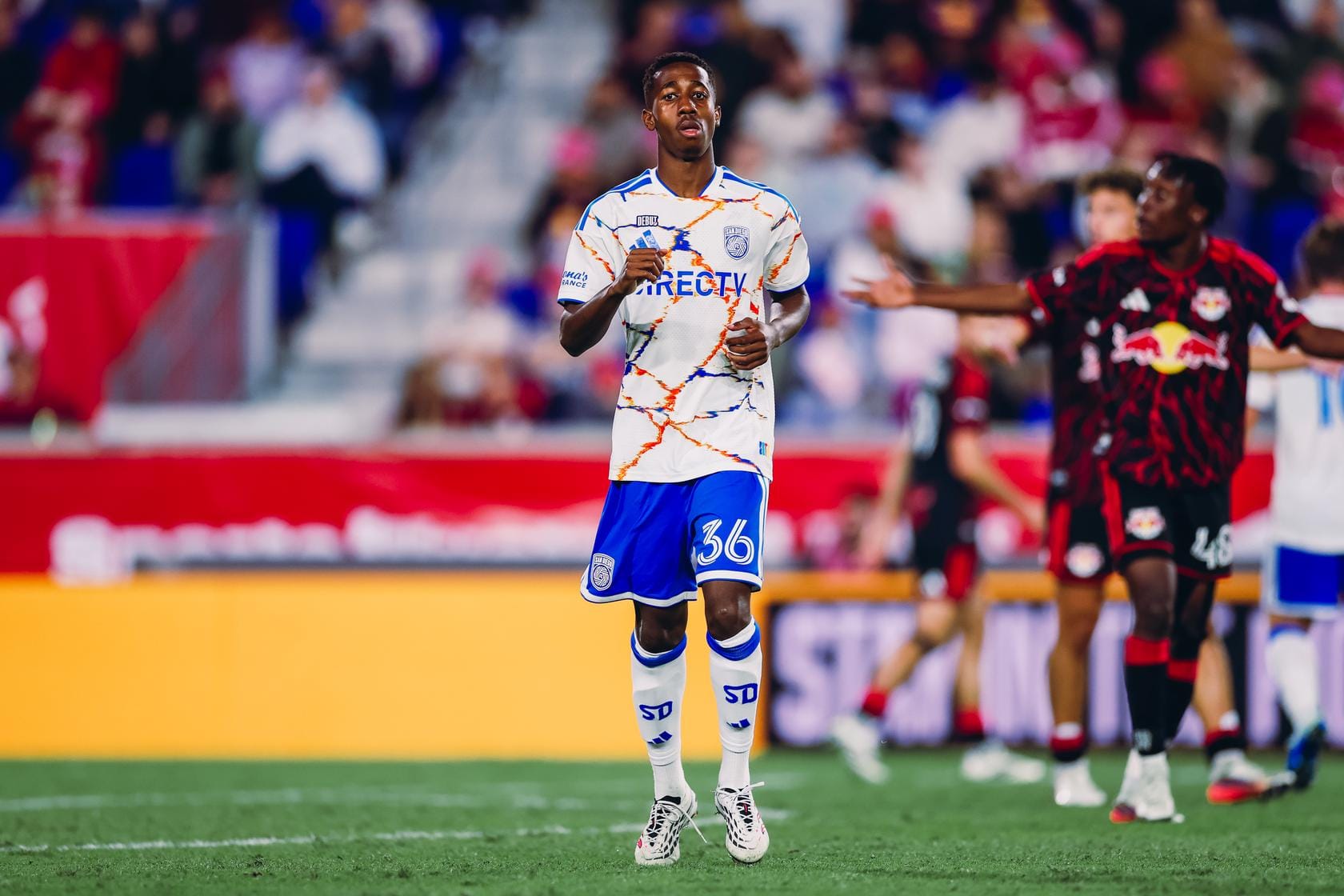
SDFC suffered another setback Saturday night, falling 4-1 to Red Bull New York at Sports Illustrated Stadium. The loss extended San Diego's winless streak to seven MLS matches and left the club 12th in the Western Conference with 32 points, four points below the playoff line.
There is still time to make a run, but the margin for error is getting dangerously small.
SDFC returns to Snapdragon Stadium on Wednesday night to face fifth-place Houston Dynamo, followed by another match just three days later against the LA Galaxy.
If San Diego is going to make a late push for the postseason, it needs to start now.
Red Bulls Expose SDFC in a Brutal First Half
San Diego's biggest problem against New York wasn't necessarily possession or chance creation.
It was keeping up with the speed of the match.
SDFC actually started reasonably well and earned a couple of early corners. But once the Red Bulls increased their pressure, San Diego struggled to move the ball quickly enough to escape it.
New York's first goal arrived in the 15th minute. Five minutes later, it was 2-0. By the 27th minute, San Diego was down three.
In a span of 12 minutes, the match was essentially over.
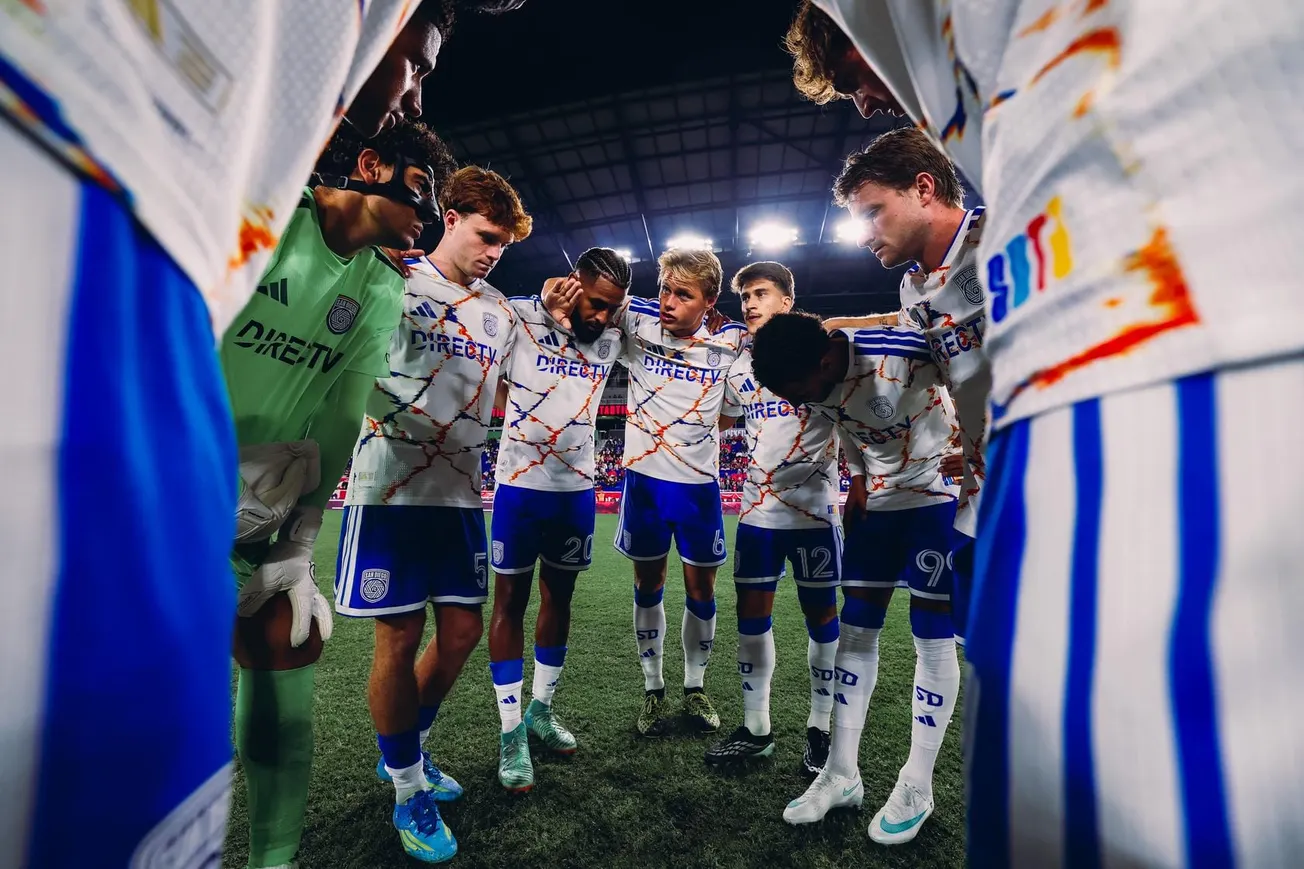
Head coach Mikey Varas acknowledged afterward that SDFC couldn't deal with New York's intensity.
"We couldn't play fast enough to match the speed of their pressing, and we make some mistakes that they capitalize on."
That was evident throughout the first half.

New York consistently made SDFC uncomfortable in possession. When San Diego attempted to play through pressure, the Red Bulls closed space quickly and forced rushed decisions. When SDFC lost possession, New York attacked with much more urgency.
The final numbers reflected the difference.
New York finished with 27 shots and 12 on target. SDFC had 14 shots with five on goal.
For a San Diego team that wants to control matches through possession, allowing an opponent to generate 27 shots is a major problem.
The Bigger Concern Is How SDFC Responds to Adversity
One poor performance can happen.
The concern for SDFC is that Saturday wasn't an isolated problem.
A week earlier, San Diego had the opposite issue against Austin FC. SDFC built a 3-0 lead and appeared headed toward a desperately needed victory before allowing Austin to score three times in the final 17 minutes.
Against New York, SDFC fell apart at the beginning of the match instead.
Different circumstances. Same result: dropped points.
Varas identified that inconsistency after Saturday's loss.
"Last game, we were up 3-0, and we took our foot off the pedal and ended up conceding three. Tonight, it's a matter of not being ready for that game."
That might be the most concerning part of SDFC's current form.
This isn't simply a finishing problem or a defensive problem anymore. San Diego has struggled to put together complete performances.
When the attack works, the defense has failed to close games. When SDFC controls possession, it hasn't always created enough danger. Against New York, the team couldn't even establish the type of control it normally relies on.
Varas was particularly critical of the team's reaction once things started going wrong.
"We are mentally in a place where we don't respond well to adversity, and our response isn't strong enough."
With six matches left, that has to change immediately.

Get the best coverage of San Diego FC and San Diego Wave straight into your inbox.
Bakambu Provides One Positive
If there was one encouraging moment Saturday, it came from Cédric Bakambu.
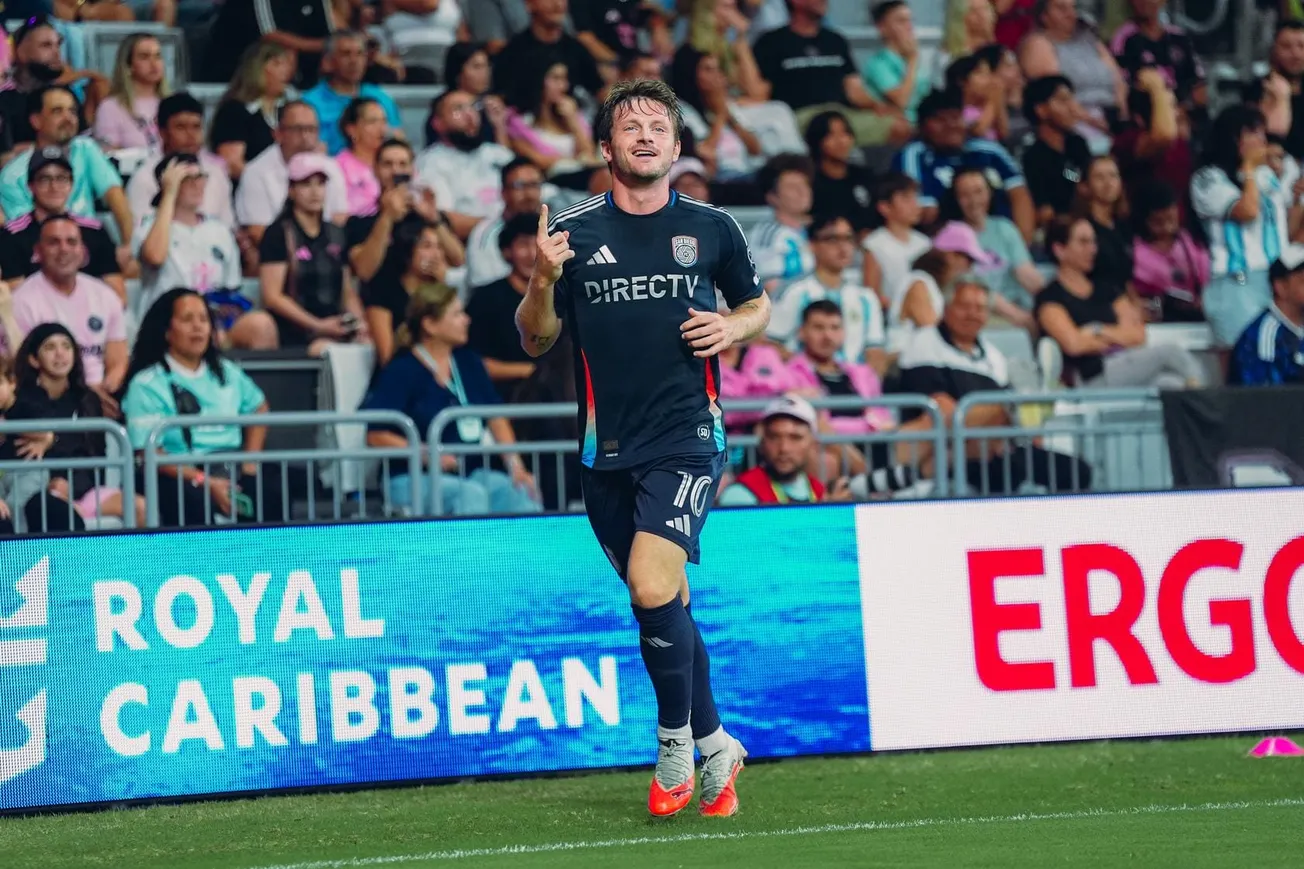
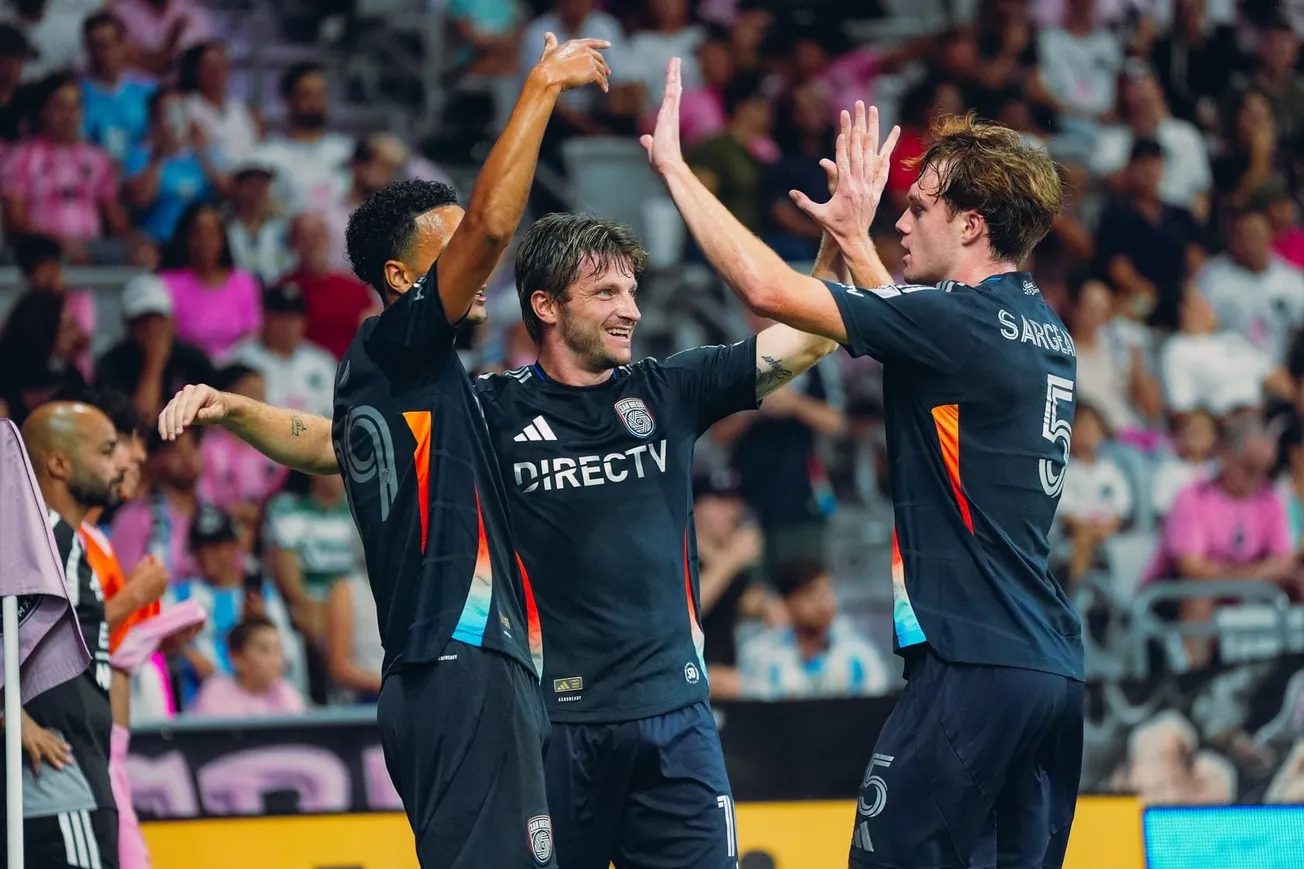
The veteran striker entered at halftime for Marcus Ingvartsen and scored in the 60th minute, redirecting Anders Dreyer's cross into the bottom corner.
Bakambu now has two goals and an assist since joining SDFC.
More importantly, the goal showed one way San Diego could use him down the stretch.
Dreyer remains SDFC's most consistent creator, and Bakambu gives him a true penalty-box target. Instead of asking Dreyer to create and finish everything himself, San Diego can use his service from the right side to find Bakambu attacking dangerous spaces inside the box.
Whether Varas starts Bakambu or continues using him alongside or in place of Ingvartsen is something to watch Wednesday.
But after Saturday's performance, changes should be on the table.
Varas didn't single out any individual player afterward.
"Nobody played good tonight, and I didn't coach well enough tonight. We got outplayed, and that's that."
It was a harsh assessment, but a fair one.

Houston Presents a Very Different Challenge
There isn't much time for San Diego to recover.
Houston comes to Snapdragon Stadium on Wednesday sitting fifth in the Western Conference with 45 points and a 13-6-9 record.
The Dynamo have been one of the stronger teams in the West this season and have proven particularly difficult to break down. Earlier this summer, Houston put together five consecutive shutout victories, tying an MLS record, while going 485 minutes without conceding.
Houston's most dangerous player has been Guilherme Augusto.
The Brazilian attacker has 14 MLS goals this season and has been directly involved in a significant portion of Houston's attack. Earlier this season, Houston noted that Guilherme had contributed to 21 of the club's first 32 league goals.
He can create problems in several ways.
Guilherme is comfortable receiving the ball between the lines, attacking from wider positions or finding shooting opportunities around the penalty area. SDFC cannot allow him the type of space New York found between its midfield and defensive lines Saturday.
Mateusz Bogusz gives Houston another creative threat. His ability to find pockets of space and shoot from distance means SDFC's midfield cannot become disconnected from its back line.
Houston has also added more options up front. Lyle Foster scored in the Dynamo's 2-2 draw against Minnesota on Saturday, while Duncan McGuire came off the bench to score a stoppage-time equalizer. Héctor Herrera is also available again after serving a one-match suspension.
That gives Houston several different ways to attack a San Diego defense that just allowed four goals.
SDFC Has to Play Faster
The tactical lesson from the Red Bulls match should be clear heading into Wednesday.
Possession means very little if the ball isn't moving quickly enough to disrupt the opponent.
San Diego has spent much of the season controlling possession, but there have been too many sequences where the ball moves sideways without forcing defenders to make difficult decisions.
Against New York, that became even more damaging because the Red Bulls actively punished slow decisions.
Houston won't necessarily press exactly like New York, but SDFC still needs more urgency.
Tverskov, Gabriel Pirani, Onni Valakari and the rest of the midfield have to find forward passes earlier. Dreyer and Elias Achouri need opportunities to receive the ball before Houston's defensive structure is completely set.
SDFC also needs runners beyond the ball.
When everyone comes toward possession, the field becomes smaller and easier to defend. Runs behind Houston's back line could create space underneath for Dreyer and the midfielders to operate.
The objective shouldn't be abandoning San Diego's possession identity.
It should be making that possession actually hurt opponents.
Rest Defense Cannot Collapse Again
The other major issue is what happens when SDFC loses the ball.
San Diego's possession-heavy approach naturally pushes numbers forward. That makes the positioning of the players behind the attack — often referred to as rest defense — extremely important.
When the spacing is correct, SDFC can immediately pressure the ball and prevent a counterattack.
When it isn't, opponents can run directly at San Diego's back line.
New York repeatedly found opportunities to attack SDFC before the defense could reset. Houston has enough quality to punish the same mistakes.
That means San Diego's midfielders cannot all get caught ahead of the ball. The center backs also need to recognize when to step forward and when to protect the space behind them.
Giving Guilherme, Bogusz or Foster open field to attack would be asking for trouble.
Who Starts at Striker?
Varas also has an interesting decision to make up front.
Ingvartsen leads SDFC with 12 goals and has been the club's primary striker throughout the season.
But Bakambu's performance against New York deserves consideration.
Bakambu offers something slightly different. He is comfortable operating inside the penalty area and showed on Saturday that he can attack crosses from Dreyer.
With San Diego desperately needing goals and wins, there is an argument for finding a way to get both strikers involved.
That doesn't necessarily mean starting them together in a traditional two-forward system. Bakambu could start centrally with Ingvartsen operating underneath or drifting into spaces around him, or Varas could continue using one as a second-half option against tired defenders.
Whatever the solution, SDFC needs more consistent production around Dreyer.
Dreyer added his 13th assist of the season against New York and continues to create opportunities even while the team struggles.
San Diego cannot expect him to carry the attack by himself.
Wednesday Is About More Than Three Points
Mathematically, SDFC's season is far from over.
Practically, the urgency is becoming impossible to ignore.
San Diego has six regular-season matches remaining and sits four points below the playoff line. The club hasn't won an MLS match since Aug. 29.
The performances against Austin and New York were damaging for completely different reasons. One showed SDFC couldn't protect a three-goal lead. The other showed it wasn't prepared to match an opponent's intensity from the opening whistle.
Those are not problems a team can continue having in October while trying to chase down a playoff spot.
Houston will arrive at Snapdragon Stadium with one of the stronger teams in the Western Conference and plenty of attacking quality. A victory won't come simply because San Diego is desperate for one.
SDFC has to play faster in possession, protect itself when the ball turns over and show a much stronger response when the match becomes uncomfortable.
There are still enough points available to make a playoff push.
But after seven matches without a win, SDFC has reached the point where encouraging stretches and lessons learned aren't enough.
They need results.