
Table of Contents
San Diego FC is running out of time.
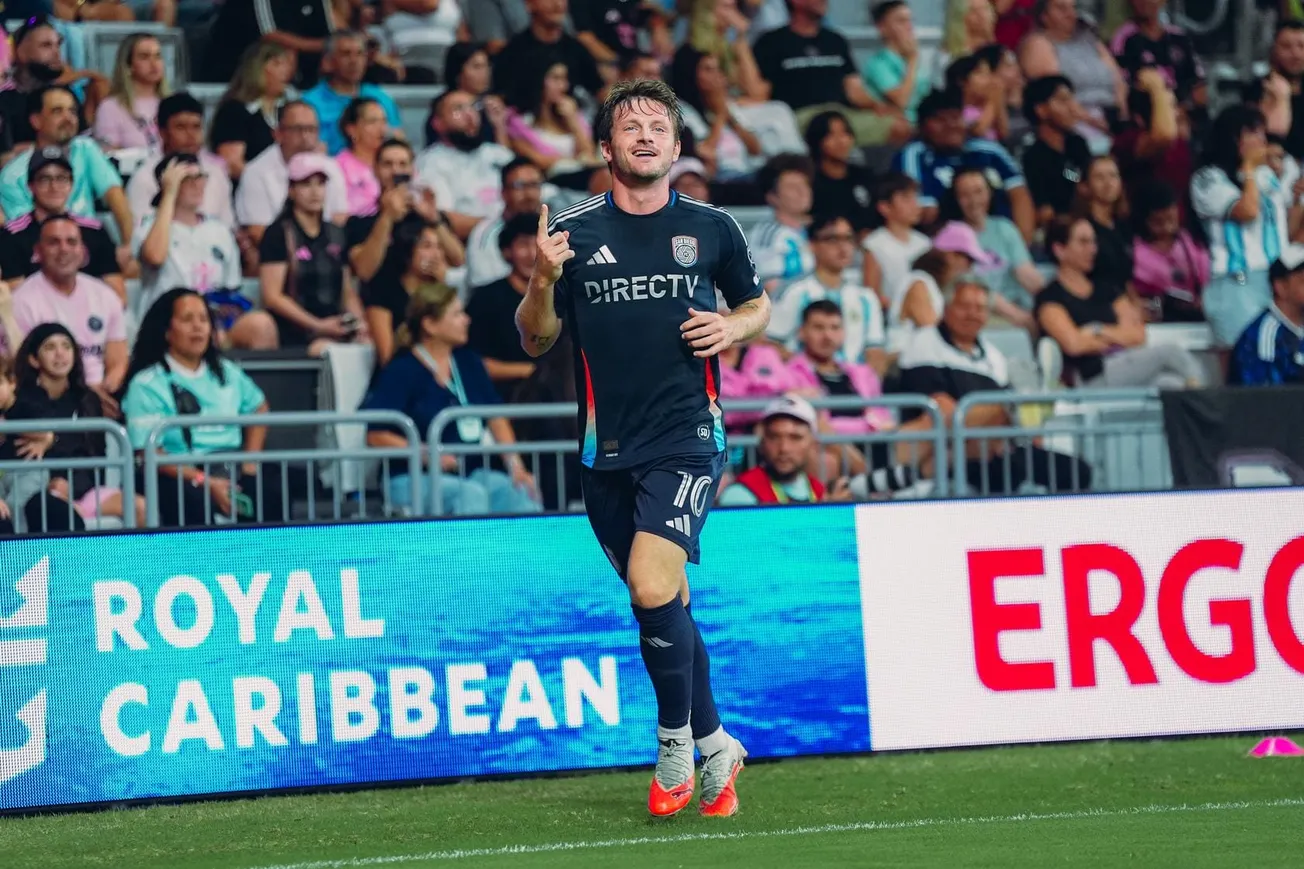
With Saturday's 3-3 draw against Austin FC, SDFC now has seven matches remaining in the 2026 MLS regular season. The club sits 12th in the Western Conference with 32 points, and the international break has arrived at a critical moment.
There are no more tournaments to distract from the league schedule. No more international breaks after this one. No more opportunities to reset the calendar.
Just seven games.
And after turning a 3-0 lead into a 3-3 draw in the final 17 minutes against Austin, SDFC has made its margin for error even smaller.
The frustrating part is that San Diego showed exactly why there is still belief in this team. After a completely ineffective first half, SDFC came out of halftime and scored three goals in 14 minutes.
Then it stopped playing and that is where the problems began.
A First Half to Forget
The 3-4-3 formation that showed promise against Inter Miami remained in place, but the attacking side of the system never really got going during the opening 45 minutes.
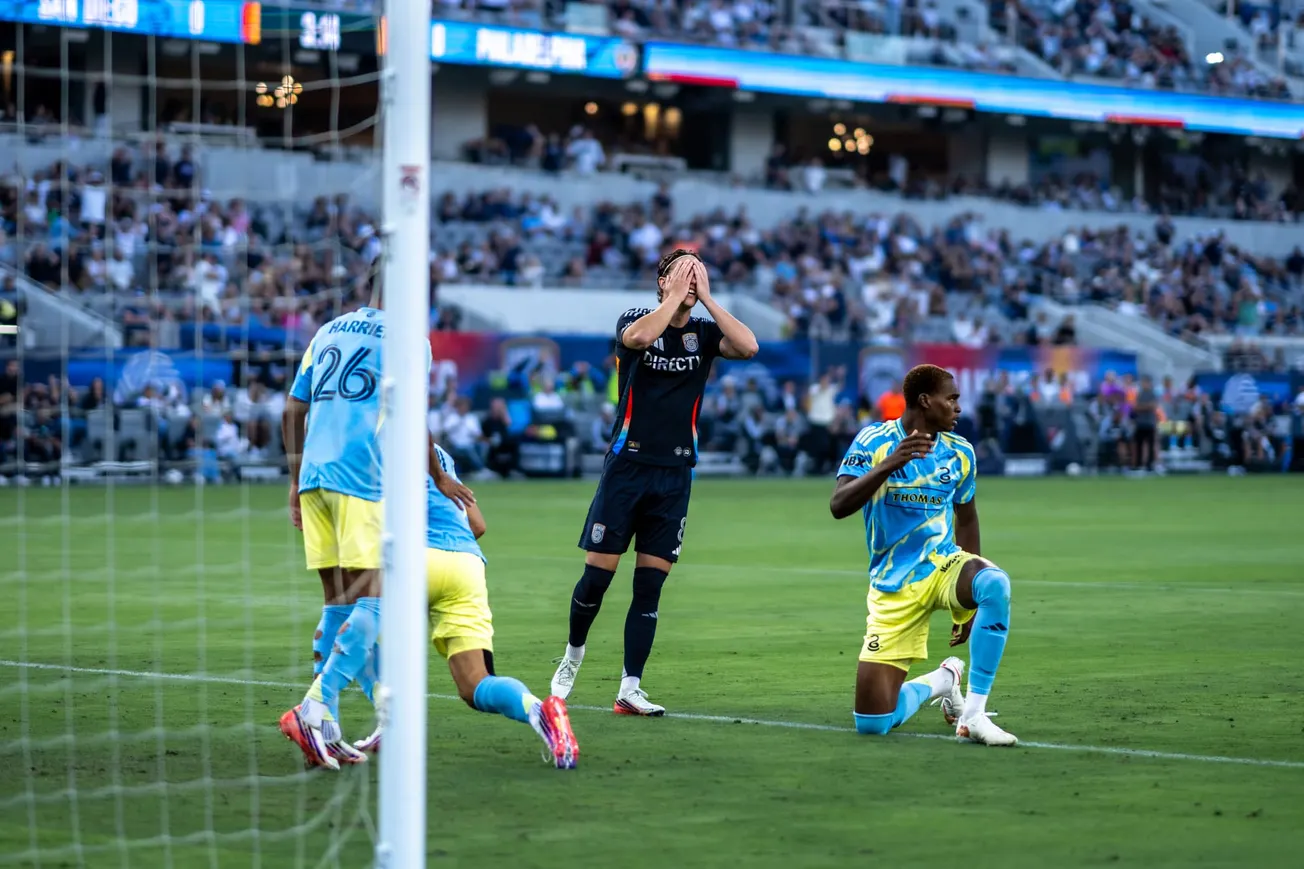
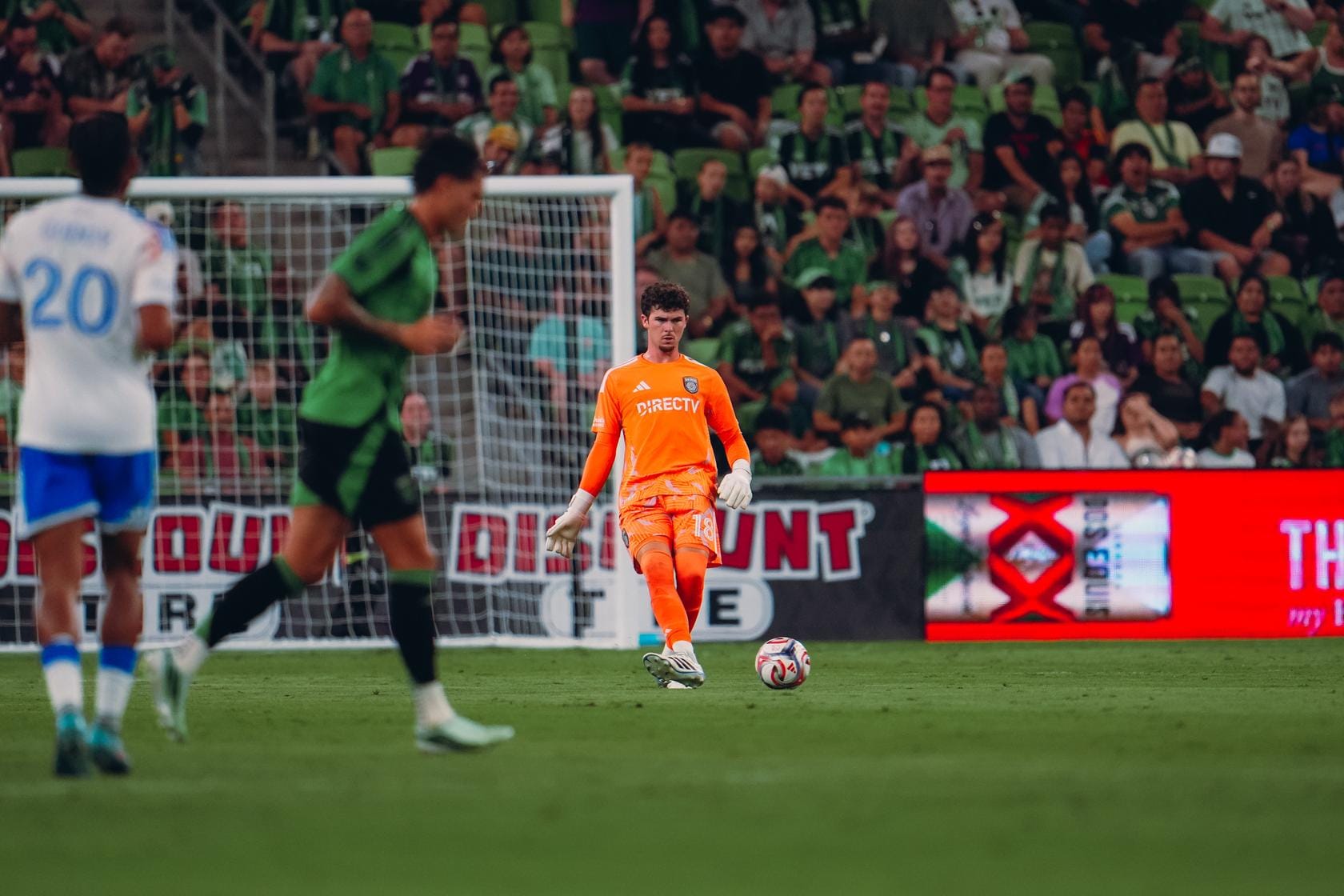
Austin generated seven shots and nine touches inside SDFC's penalty area in the first half. San Diego generated zero shots and zero touches in Austin's box.
The problem wasn't simply that SDFC wasn't scoring. It struggled to progress the ball into dangerous areas in the first place.
The attack became heavily reliant on the wings, while only about 18 percent of SDFC's possession came through the central channel. David Vazquez struggled to create separation against Austin right back Mikkel Desler, while the right side didn't provide enough consistent penetration either.
The 3-4-3 gave SDFC a solid defensive shape, but it also created a problem when the team had the ball.
There were too many long passes into the final third without enough precision. San Diego completed just nine accurate long balls at a 39 percent completion rate, making it difficult to establish sustained attacking pressure.
Defensively, however, the back three held up. SDFC recorded 14 clearances in the first half and went into halftime tied 0-0. But there was very little indication that the attack was going to suddenly explode.
Then Mikey Varas made the adjustment.
Bakambu Changes the Game
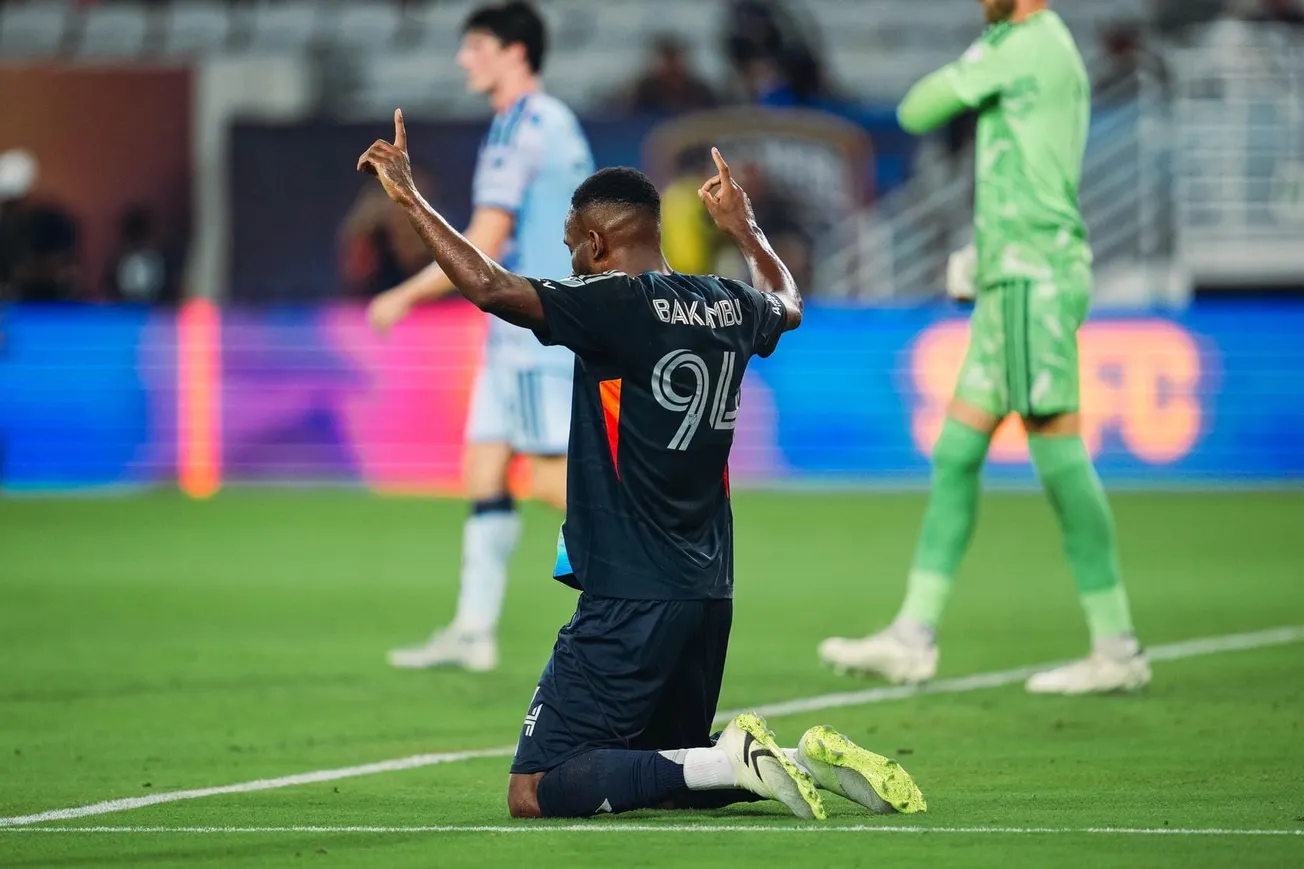
At halftime, Varas replaced Vazquez with Cédric Bakambu.
That allowed Marcus Ingvartsen to shift toward the left side while Bakambu operated centrally and it changed the game.
Suddenly, SDFC had a legitimate reference point at striker who could occupy Austin's center backs, compete for balls in the box and create space for the players around him which led to goals.
San Diego registered its first shot on target shortly after halftime. Then Ingvartsen had another attempt saved before the breakthrough arrived in the 50th minute. The sequence was a good example of what SDFC can do when it moves the ball forward with purpose.
Aníbal Godoy won possession in midfield and drove toward the penalty area before moving the ball wide to Oscar Verhoeven. The wingback delivered a dangerous cross into the box, where Bakambu and Ingvartsen were waiting.
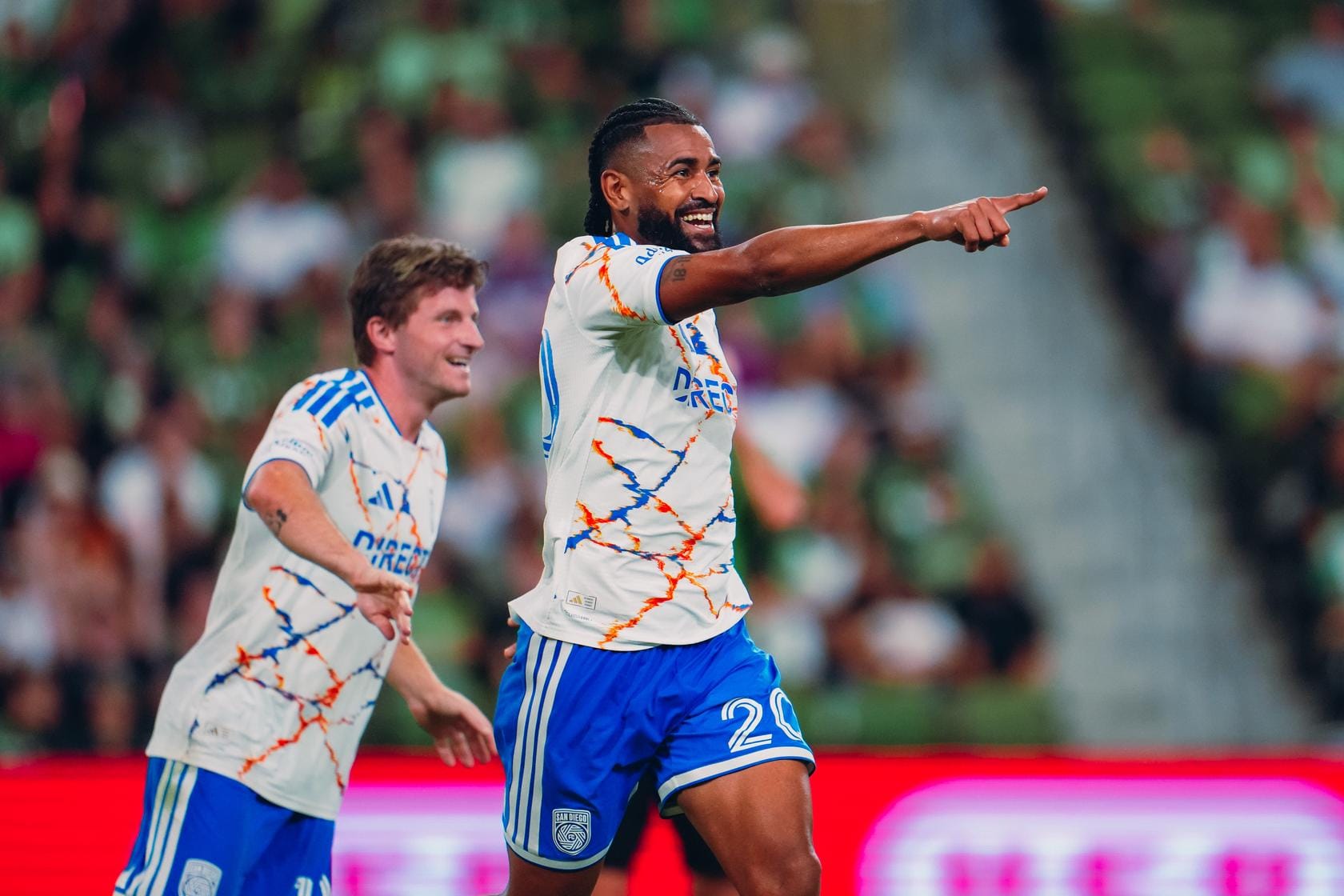
Ingvartsen's header was pushed toward the far side, but Godoy had continued his run into the box. The veteran midfielder arrived at the right moment and finished the rebound.
For Godoy, it was his first goal of the season and his second MLS goal for SDFC. Eight minutes later, San Diego doubled the lead. Godoy found Ingvartsen with a long ball, and with Austin goalkeeper Damian Las well outside his goal, Ingvartsen chipped the ball back toward Bakambu.
Bakambu won the aerial duel, but Austin defender Mikkel Desler ultimately headed the ball into his own net to make it 2-0.
Then came the goal that appeared to put the game away.
SDFC's Best Goal of the Night
The third goal was probably the clearest example of the attacking football SDFC wants to play.
San Diego restarted quickly after an Austin throw-in and worked the ball through Dreyer, Kieran Sargeant and Bakambu. Dreyer then received the ball again and continued his run toward the penalty area.
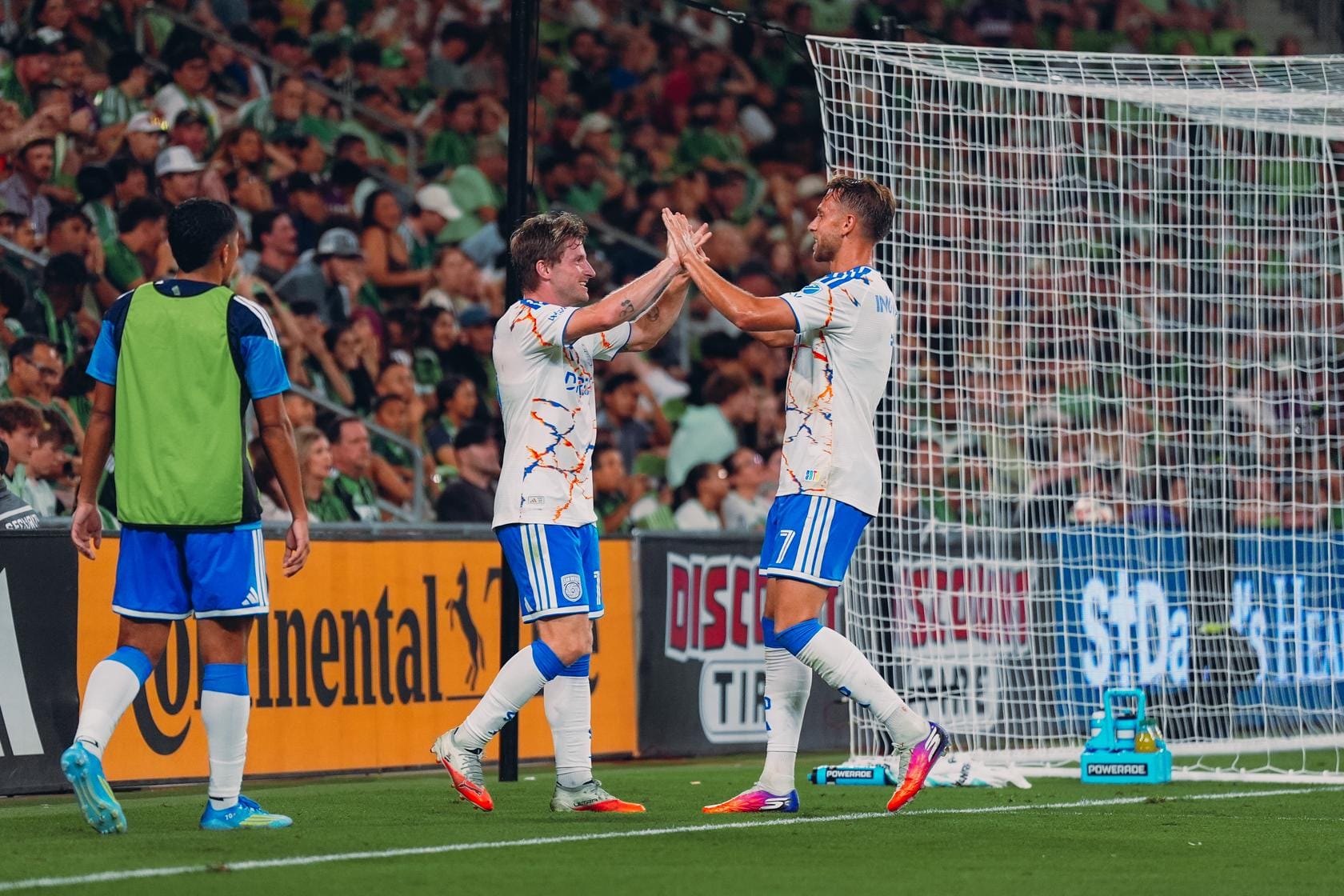
Bakambu returned the ball to the Danish winger, who drove deeper before slipping a pass across the six-yard box. Ingvartsen was there to finish for the third. It was Ingvartsen's 12th goal of the season and his 17th goal contribution.
Dreyer picked up his 12th assist of the MLS season, while Bakambu registered his second goal contribution since joining the club. At that point, SDFC had completely flipped the match.
And then, instead of continuing to attack Austin, San Diego started trying to protect the scoreline. That decision changed everything.
The Collapse Started with Passivity
Austin made two substitutions after the third goal, bringing on Ilie Sánchez and Jorge Alastuey. The hosts immediately increased the pressure.
San Diego's defensive line dropped deeper, and the team began allowing Austin to circulate the ball without enough pressure on the player possessing it.
The first goal came in the 73rd minute.
Jeppe Tverskov turned the ball over in his own defensive third, allowing Austin to restart its attack. After San Diego initially dealt with a cross, Austin recycled possession and eventually moved the ball back to Ervin Torres.
Torres delivered a cross into the box, where Brandon Vázquez beat Ian Pilcher and headed home.
Nine minutes later, the deficit was down to one.
Austin worked the ball toward the right side of the penalty area before Ervin Torres found Mikkel Desler in space. Desler delivered a cross beyond the six-yard box, Jon Bell redirected it back toward the middle and Christian Ramírez finished with a header.
The biggest issue wasn't necessarily the finish. It was the amount of time and space Austin was given to build the attack. SDFC's defensive shape had become reactive rather than proactive.
Players were tracking runners rather than stopping the source of the attack.
Then came the equalizer.
Get the best coverage of San Diego FC and San Diego Wave straight into your inbox.
The Third Goal Exposed the Same Problem
Austin's final goal came in the 86th minute and exposed a different issue. The hosts played a ball over San Diego's midfield block toward Jon Gallagher. Ian Pilcher was caught between two decisions. He could step forward and challenge Gallagher. Or he could drop and protect the space behind him.
Instead, he did neither.
Gallagher received the ball, moved inside and slipped a pass through to an unmarked Ramírez. The Austin forward calmly finished into the far corner to tie the match.
Three Austin goals in 13 minutes.
And San Diego had gone from looking like a team in complete control to one scrambling to hold onto a point.
The Bigger Problem Isn't Just the Back Line
It would be easy to blame the collapse entirely on the defenders.
There were individual mistakes, and the back line certainly wasn't good enough once Austin began applying pressure.
But the problem is bigger than one player.
SDFC's defensive issues have appeared in several different forms this season: defending in a low block, preventing counterattacks, dealing with crosses and managing possession after turnovers.
The common thread is that San Diego has struggled to control what happens immediately after losing the ball.
When SDFC attacks, the team commits numbers forward.
That isn't inherently a problem. In fact, it's a major part of what makes the team's attacking style effective.
But the rest-defense structure has to be good enough to prevent the opponent from turning one turnover into a dangerous transition.
Against Austin, it wasn't.
And once San Diego dropped deeper after going 3-0 up, it surrendered another important part of its identity: pressure.
Instead of making Austin defend, SDFC allowed Austin to attack.
That's a dangerous proposition for a team that has struggled to defend consistently this season.
The Numbers Tell the Story
There is another statistic that makes this collapse particularly frustrating.
SDFC has now dropped 12 points after the 75th minute this season, while its late-game point differential from winning or losing positions sits at -9.
There is also a concerning relationship between conceding and winning.
Seven of San Diego's eight MLS victories this season have been shutouts.
That means once SDFC concedes, the ability to recover and still win has been extremely limited.
The issue isn't simply keeping clean sheets. It's finding a way to maintain the same attacking and defensive mentality after the game becomes uncomfortable.
That's exactly what happened in Austin.
San Diego's best soccer came when the team was attacking the game.
Its worst soccer came when it tried to protect the result.
There Is Still Time — But Not Much
The international break gives SDFC 13 days between matches.
That could be valuable.
Players will have time to recover, while Varas and his staff have an extended training block to address the defensive issues and figure out how to make the 3-4-3 work over an entire match.
The formation has now produced some encouraging attacking stretches against Miami and Austin.
But the team still has to prove it can defend with the same structure and intensity when it has something to protect.
The next test comes Oct. 11 against the New York Red Bulls.
After that, there are only six more games.
Seven matches remain to save SDFC's season.
Last year, San Diego collected 11 points across its final seven regular-season matches. This year's team will likely need to produce a similar or better closing run while also hoping the teams around it drop points.
There is still a path into the postseason.
But SDFC cannot afford to keep giving away points like it did in Austin.
A 3-0 lead on the road should be three points.
Instead, San Diego left Texas with one.
And with only seven games remaining, those lost points are becoming harder and harder to replace.