Table of Contents
After 14 matches, San Diego FC finds themselves sitting in 10th place, two points out of the 9th place and a spot in the playoffs. For many fans, 2026 has been a frustrating year – especially after being spoiled to an incredible inaugural year in 2025 where SDFC exceeded all expectations.
After digging through multiple layers of data, it's clear that several major issues have held the club back through the first part of the 2026 season. We take a look behind the data and analyze what's been working and what needs to improve after the World Cup break.
Let's dive in.
The Attack is Still Producing Goals
Let's start with the good news. Clearly, the attack has not disappeared. In fact, it's flourishing as of late and perhaps the only thing saving this team's season.
San Diego have scored 28 goals through 14 matches, the sixth-highest total in MLS. That number alone shows this team is still capable of creating dangerous moments and winning high-scoring matches.
Much of that production has come from the club’s attacking core, specifically the 'Danish Connection'.
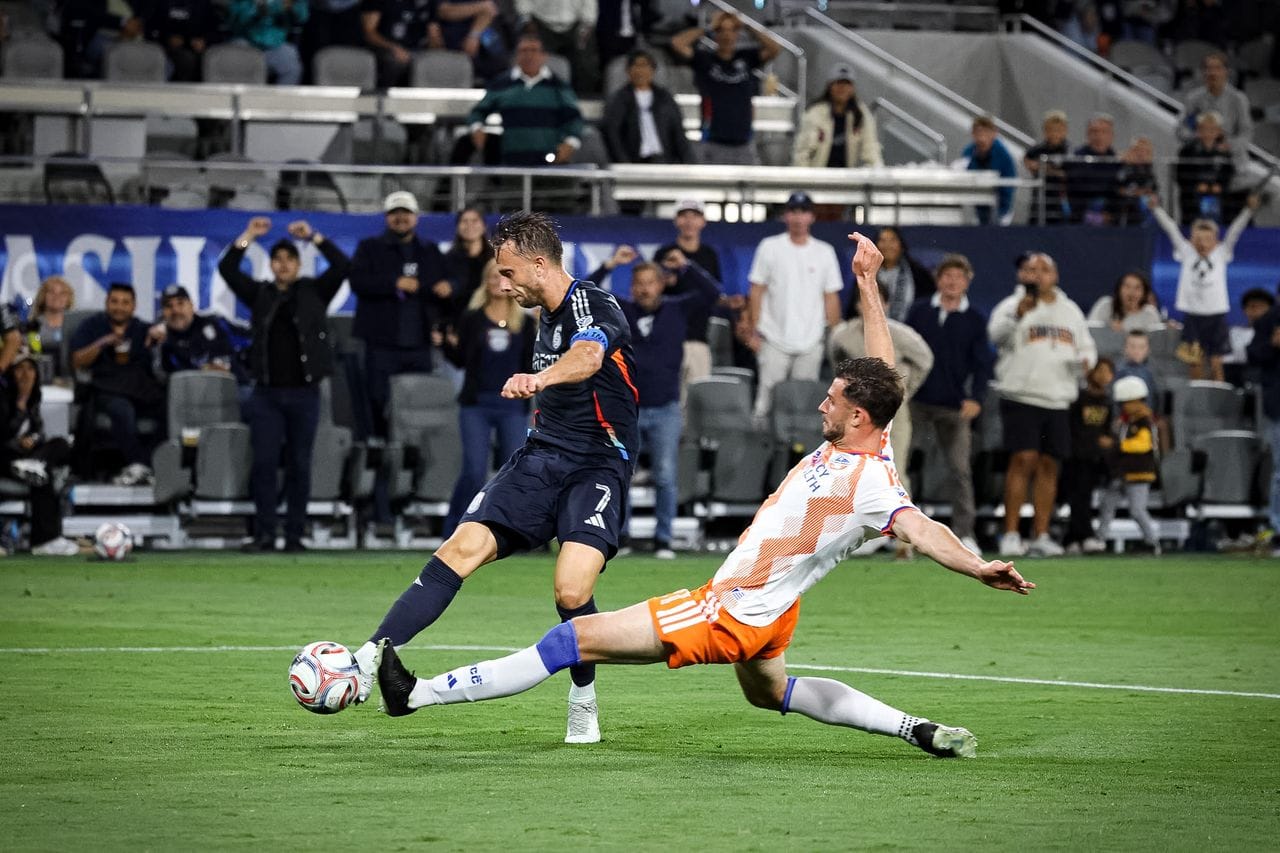
Forward Marcus Ingvartsen has been clinical in front of goal with 11 goals from 6.58 expected goals (xG). That means he is significantly outperforming the quality of chances he has received, a sign that his finishing has been one of the brightest spots of the season.
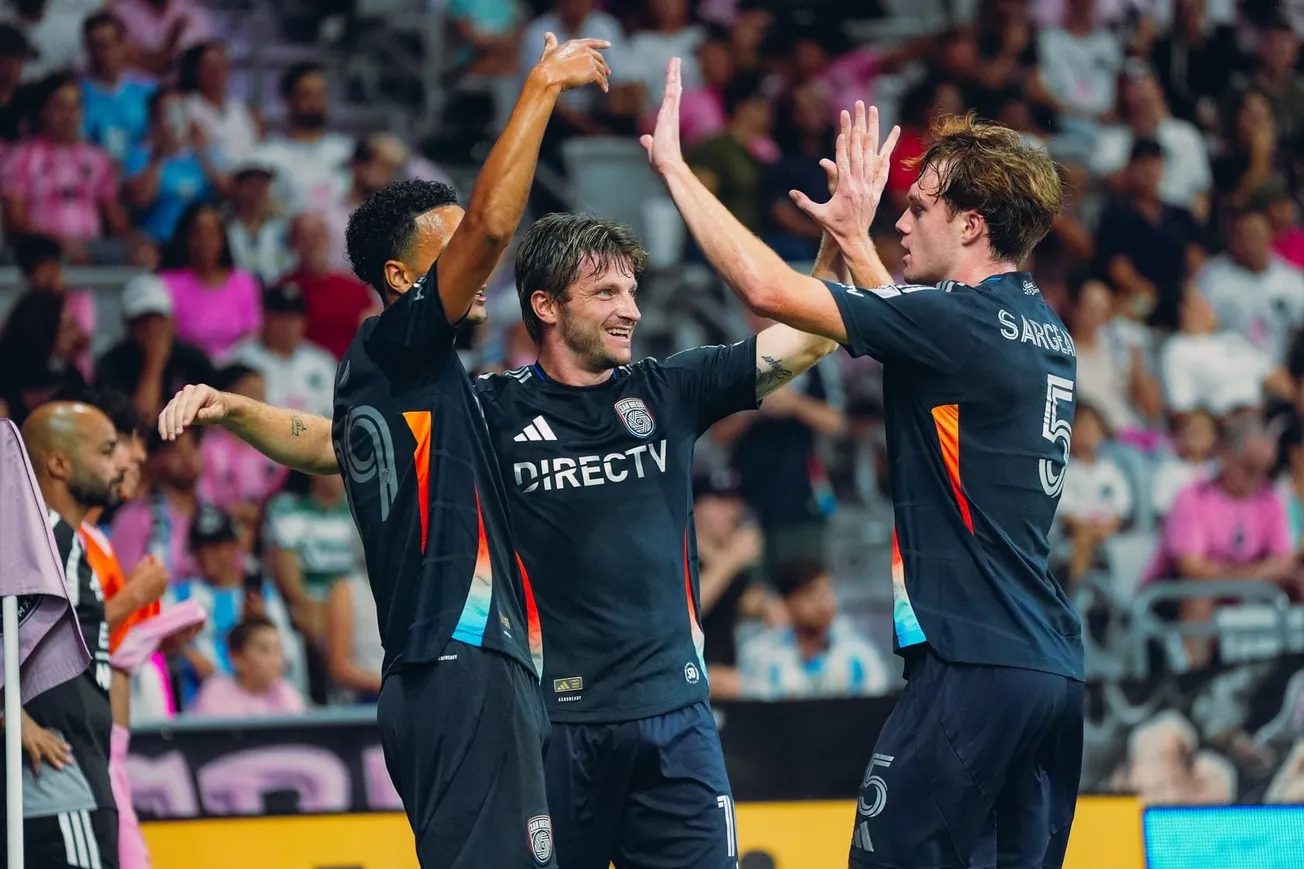
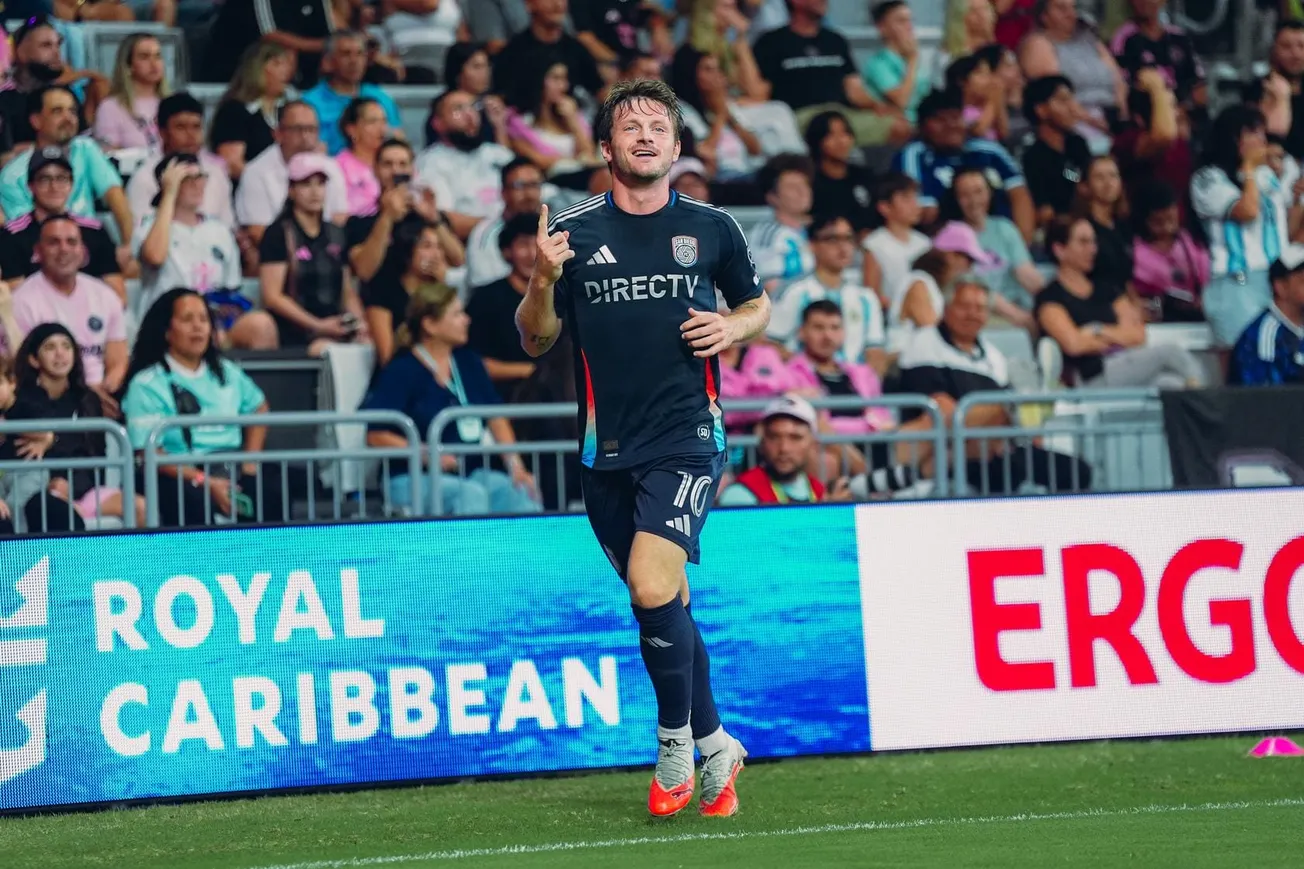
Anders Dreyer continues to be the creative engine of the team. The Danish winger leads SDFC in key passes while contributing six goals and five assists. His movement and chance creation remain among the best on the roster. He currently leads the league in key passes (42).
When SDFC are flowing in possession, they can still look like one of the more entertaining attacking teams in the league.
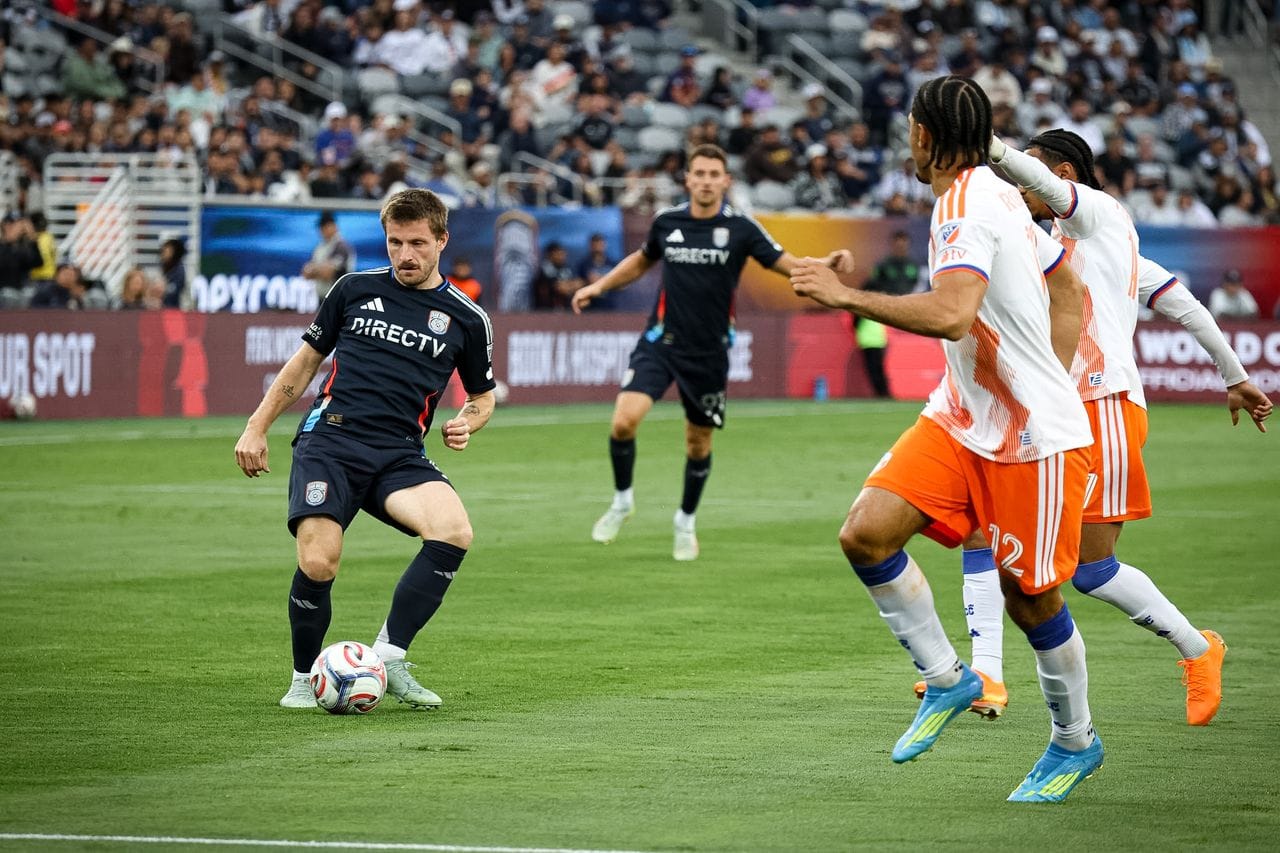
Underlying Offensive Stats Tell a Different Story
Unfortunately, there are bad news even in the good news.
Even though the goals are there, the underlying metrics suggest the attack has not been quite as dominant as the raw scoring numbers indicate. San Diego’s expected goals total sits at 24.11, which ranks around the middle of the league rather than among the elite attacks.
That gap between actual goals scored and expected goals suggests SDFC have relied heavily on strong finishing performances rather than consistently creating overwhelming chances. It begs the question of how sustainable is SDFC's current form – certainly relying on one or two players to do the heavy lifting will not bring long-term success. Perhaps, SDFC have done just enough to be in the playoff hunt thus far as they await additions to the roster after the World Cup.
Shot Creation Leads to Goal Creation - SDFC Lack Both
Another concerning statistic is shot volume. Despite their possession-heavy style, SDFC rank near the bottom of MLS in total shots attempted. That suggests the club often controls the ball without consistently turning possession into dangerous opportunities.
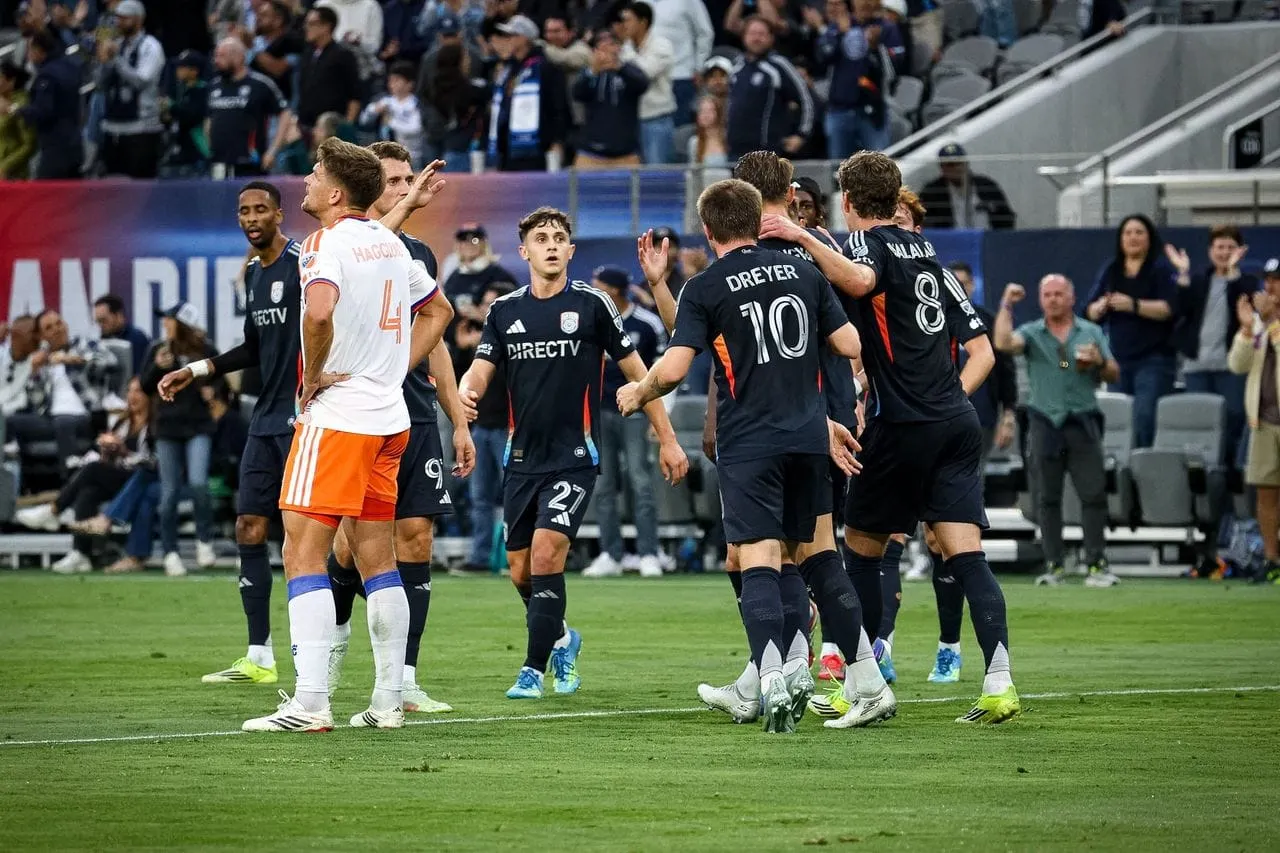
There have been stretches this season where SDFC circulate the ball well through midfield but struggle to create enough clear-cut chances inside the penalty area. A great example of this is the recent match against FC Cincinnati. SDFC dominated the field tilt 92%-8%. Passing-wise, that's 178-14 passes completed in the final 1/3.
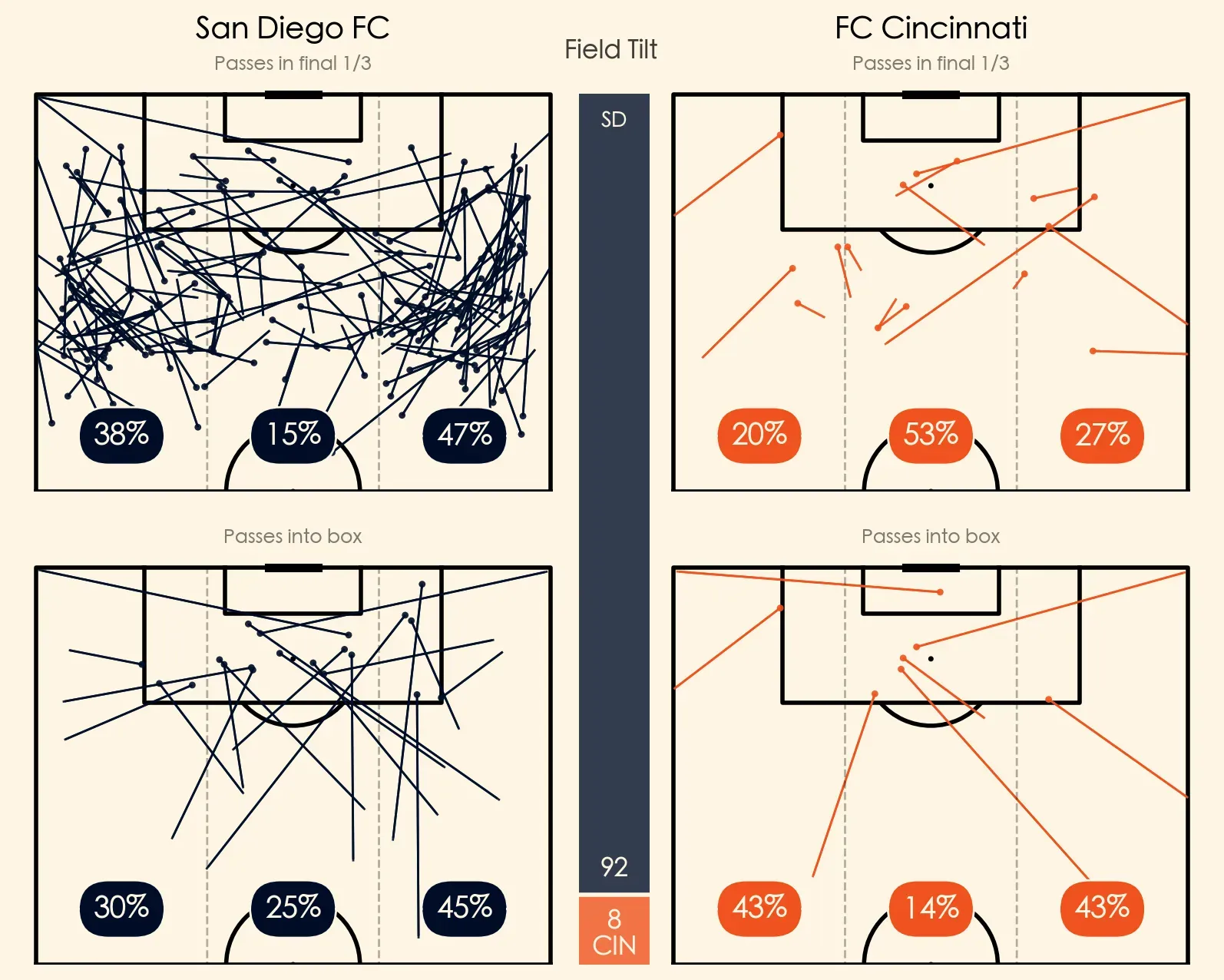
That effort from the players alone should win a team the match. Despite the dominant performance in the final 1/3, SDFC managed to get away with only a point due to a last-minute defensive collapse, something SDFC fans have become used to by now.
Defensive Problems Have Been the Biggest Issue
The clearest explanation for San Diego’s place in the standings comes on the defensive side.
SDFC have allowed 23 goals in 14 matches, one of the weaker defensive records in the Western Conference. The underlying defensive metrics are even more alarming.
San Diego have conceded 26.77 expected goals against (xGA), which ranks near the bottom of MLS. In other words, opponents are consistently creating dangerous scoring chances against them. That number is important because expected goals against measures the quality of opportunities conceded, not just whether the opponent finished them.
The data suggests this is not simply bad luck. Opponents are regularly finding space against SDFC in transition, attacking behind the fullbacks, and generating high-quality opportunities inside the box.
Despite the numbers showing a lack of defensive prowess and a high number of goals given up, they fail to highlight an important high point as it relates to Mikey Varas' backline. Manu Duah currently leads the MLS in touches (1345) and Chris McVey is fifth (1191). SDFC's system forces the center backs to be the focal point in starting the attack and that has been statistically proven. Duah and McVey remain the conductors of the band that is SDFC.
The Possession Style Has Created Vulnerabilities
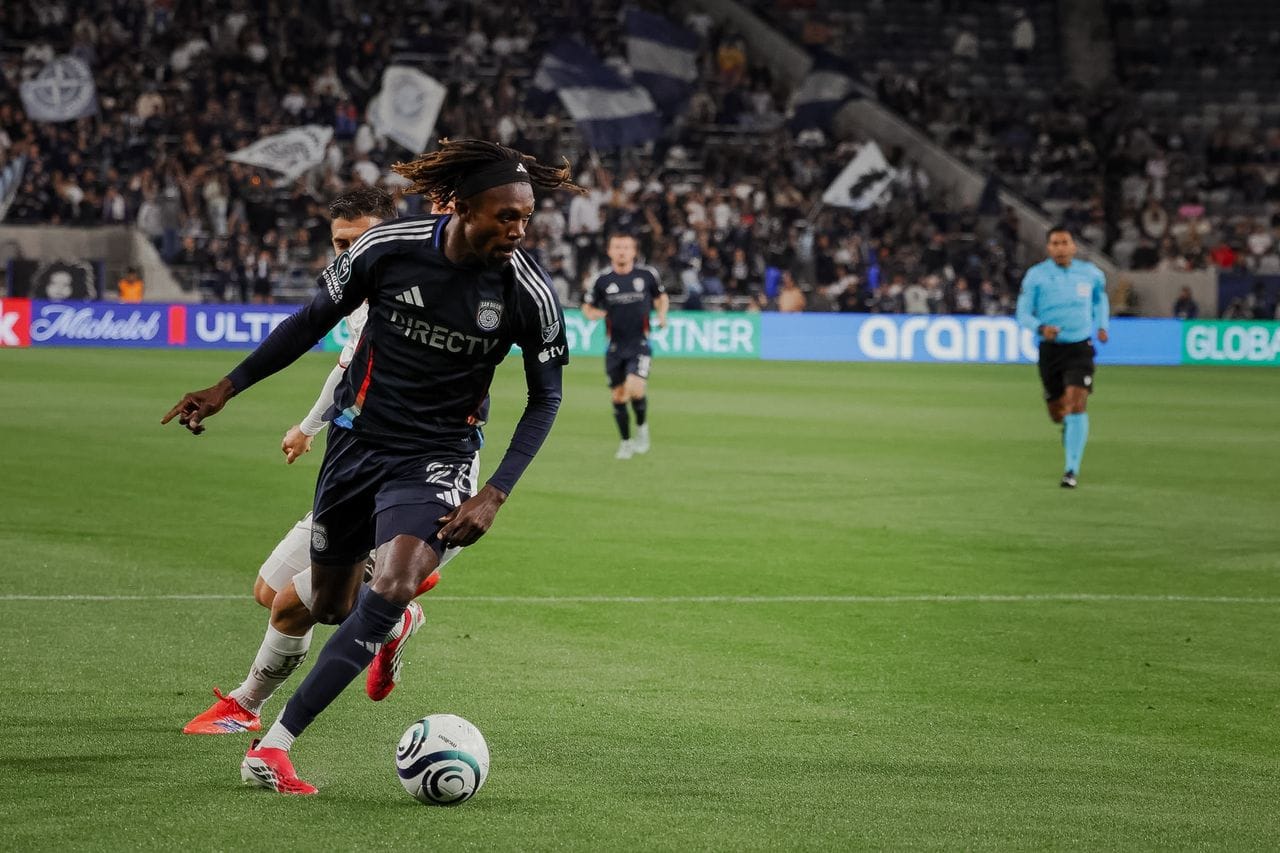
One of the defining characteristics of San Diego under Mikey Varas has been a possession-first identity. At times, that style has looked excellent. SDFC can dominate the ball, push opponents deep, and control the rhythm of matches.

But the current roster construction has struggled to consistently support that approach defensively. Because San Diego commit numbers forward and ask their defenders to play aggressively in buildup, the team can become vulnerable when possession breaks down.
When turnovers occur in midfield or wide areas, opponents often attack quickly into open space. The numbers reflect that issue.
SDFC have faced 185 shots this season, one of the highest totals in MLS (7th most). That means opponents are not only creating good chances, but they are also creating them frequently. The combination of high shot volume conceded and poor xGA numbers paints the picture of a team that is too open defensively.
Overall Thoughts
Despite the struggles SDFC faced this season, the numbers suggest they are a talented but unbalanced team. They are dangerous going forward, entertaining to watch, and capable of scoring against anyone. But until the defensive side stabilizes, the club’s position near the playoff line may continue to reflect exactly what the underlying data says they are: a team with exciting strengths, but flaws too significant to ignore.
The Western Conference remains tightly packed, and SDFC are still within striking distance of the postseason. If the club can reduce transition mistakes, limit opponent shot volume, and become more compact defensively, the attack should provide enough firepower to climb back into the top nine.
Sporting Director Tyler Heaps has already pledged to bring additions to this roster after the World Cup break. SDFC needs veteran help defensively and offensively. There are a few names circling the rumor mill but none bigger than the Egyptian king - Mo Salah. Can Mr. Monsour and Heaps do enough to sway Salah's decision state-side?
San Diego sure hopes so.