Table of Contents
After 12 matches last season, optimism around San Diego FC was impossible to ignore. The expansion side sat fourth in the Western Conference with a 6-4-2 record, 20 points, and one of the league’s most exciting attacks. One year later, the mood around the club feels drastically different.
Many people around the league are curious about what exactly has gone wrong with SDFC. While many tried to draw conclusions pointing to certain players no longer being a part of the club, the deeper numbers reveal a more complicated story.
SDFC now sit 13th in the West with a 3-5-4 record and just 13 points through the same number of matches. A season that began with expectations of building on last year’s success has instead turned into a test of resilience, depth, and identity.
The Numbers
Let's compare last season's form through 12 weeks of strictly MLS action to this year.
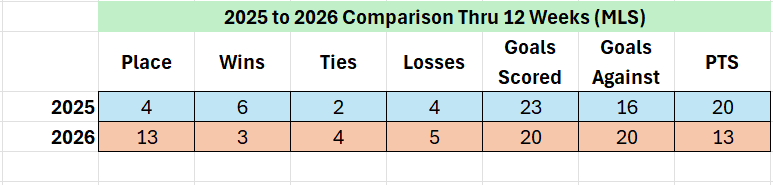
Through a third of the season, SDFC doubled their wins in 2025 as compared to this year but only one less loss.
The glaring issue goes back to finishing matches when in the lead, something that has plagued SDFC this season.
Take a look at this stat - in the 47 matches (all competitions) span that goes from the inaugural game last year against the Galaxy to the 1-0 win against Kansas City in March of this year, SDFC had only conceded eight times in the 80th minute or later. Now here is where things start to get interesting.
From the Toluca game at Snapdragon, which was SDFC's last win (all competitions) until now, a span of 11 matches, they've conceded the same number of goals (8) after the 80th minute.
The Problem
The problem is clearly consistency in defending. Last year, SDFC only scored three more goals at this point of the season, pointing to the fact that the offense has not been a real issue.
Yes - SDFC let in four more goals this season as opposed to last year, but those four goals were the difference in earning much needed points that would have this team in a good position in the standings right now.
One of the biggest differences between last season and this year has been injuries and red cards, two issues that rarely disrupted SDFC during their inaugural campaign.
Early last season, head coach Mikey Varas used the opening matches to evaluate combinations and establish his preferred lineup. Once those starters were identified, particularly along the back line, the team developed strong chemistry and consistency defensively. That stability became one of the foundations of SDFC’s success, allowing the squad to deliver disciplined defensive performances on a weekly basis.
The Other Problem
Perhaps the biggest difference between the two seasons is psychological. Last year, SDFC played with the energy and fearlessness of an expansion club with nothing to lose. Opponents were still learning how to deal with them, Snapdragon Stadium was fueled by the excitement of a brand-new franchise, and every positive result felt like history being written in real time.
This year, the novelty is gone. Expectations are real. Opponents know what SDFC want to do tactically, and every weakness is being targeted. Since the match in Toluca where SDFC were knocked out of the Concacaf Champions Cup, MLS teams followed Toluca's blueprint on how to unlock SDFC's possession-heavy gameplan and its proven extremely successful for them.
The club is firm on playing their style of soccer - the Right to Dream style. In the beginning of the season, the club's management made it very clear that they do not plan to change the system, rather they expect players to adapt and get better at playing within it.
By all accounts, if things go the way they're supposed to and players do what they're trained to do – the system can be very dangerous and successful. What that looks like is:
1. Playing out of the back with heavy possession.
2. Opponents pressing high to try and win the ball back, thus leaving space in behind exposed.
3. SDFC playing quick, counterattacking style of offense and exploiting the space left by the opponent.
SDFC’s system worked incredibly well during the club’s inaugural season, but the element of surprise is no longer there. Opponents now understand what to expect and have adjusted their game plans accordingly.
At the same time, SDFC have struggled to consistently limit costly mistakes, which is critical in the RTD system where precision is demanded in possession. One small error can quickly turn into a dangerous giveaway and leave the opposition through on goal — something that has happened far too often this season.
Get the best coverage of San Diego FC and San Diego Wave straight into your inbox.
Solution Ideas
If SDFC is adamant on not changing their way of playing to confuse/surprise the opponent, then they must do a better job of playing the RTD style.
The defenders need to be more assertive in their passing and look to exploit pockets of space after drawing the opponent in. This starts on the training ground. To be nearly perfect is asking a lot. Nevertheless, that is what the system is built on.
The chemistry of last season will take time. It will take guys being healthy. It will also take great coaching.
Mikey Varas has a tall task ahead of him. The recently signed long-term contract extension exhibits that the club has entrusted Varas as the man to lead the team to championships. That trust will surely wane if he cannot get his players to perform in a way that is needed to find success within the current system.
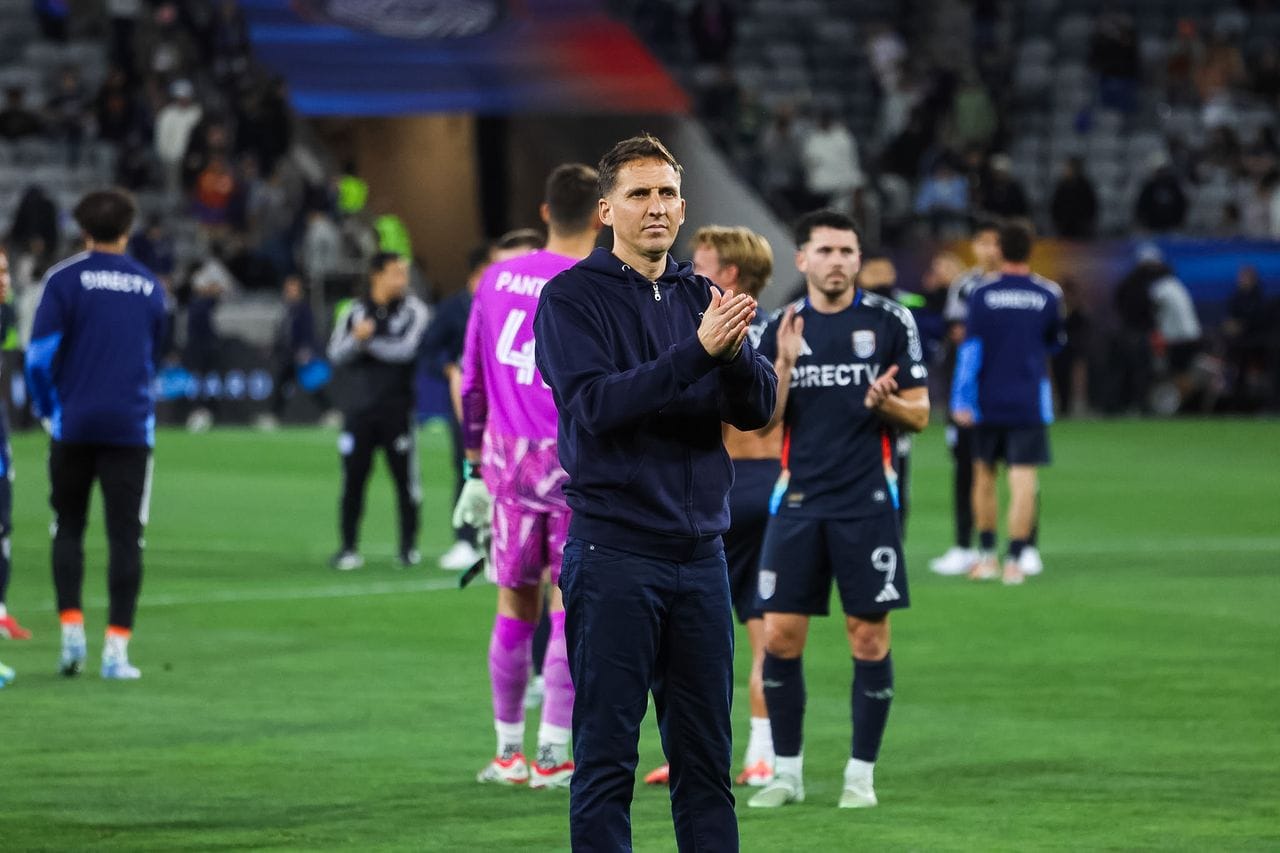
The other factor that Varas will need to instill in the club is discipline. The four red cards this season have handicapped the team from performing at their best, dropping points as a result. SDFC currently have the second-most red cards in the league, only behind FC Cincinnati and Houston Dynamo, who each have five.
But the discipline factor goes beyond just getting carded. The team must learn how to finish matches with the intensity and extreme focus.
That is the real challenge facing head coach Mikey Varas and perhaps the toughest of his tenure with San Diego FC.
The Big Picture
The good news for SDFC supporters is that reinforcements are expected to arrive after the World Cup break, with sporting director Tyler Heaps making it clear that the club plans to strengthen the roster and add much-needed depth for the second half of the season. But before reinforcements arrive, the turnaround has to begin now.
It starts tomorrow against Austin FC in what feels like one of the most important matches of the season so far. If SDFC can rediscover the focus, defensive stability, and intensity that defined last year’s squad, there is still enough time to change the trajectory of the season before it slips away entirely.