Table of Contents
Snapdragon Stadium hosted a pre-World Cup friendly Saturday afternoon between Switzerland and Australia, giving both sides one final chance to tinker with lineups before the tournament begins.
For Switzerland, it looked like a comfortable afternoon for about 45 minutes. For Australia, it looked like they had collectively forgotten where they left the ball. The Socceroos spent much of the opening half chasing shadows before a much-improved second half performance earned them a 1-1 draw through a debut goal from Tete Yengi.
For USMNT supporters, the match also provided a useful scouting report. The United States will face Australia in the group stage, and while the Socceroos have some obvious flaws, they also possess a few traits capable of making life miserable for any opponent.
The First Half
Australia forced an early corner after a rare Swiss defensive mistake, and for a brief moment it looked like they might come out aggressively.
That feeling lasted about three minutes.
Switzerland immediately settled into the game, stretching the field and using quick combinations through midfield to create central passing lanes. Australia's massive 6-foot-6 center back Harry Souttar repeatedly stepped in to snuff out danger, but he was doing a lot of the heavy lifting.
Nestory Irankunda nearly stole possession from goalkeeper Gregor Kobel with an aggressive press, one of the few moments where Australia's attack showed any life.
Unable to break through the middle, Switzerland attacked down the left. Dan Ndoye first fired over the crossbar before Michel Aebischer slipped him behind Australia's back line with a clever through ball. Goalkeeper Patrick Beach came off his line quickly to deny the chance.
The warning signs were there.
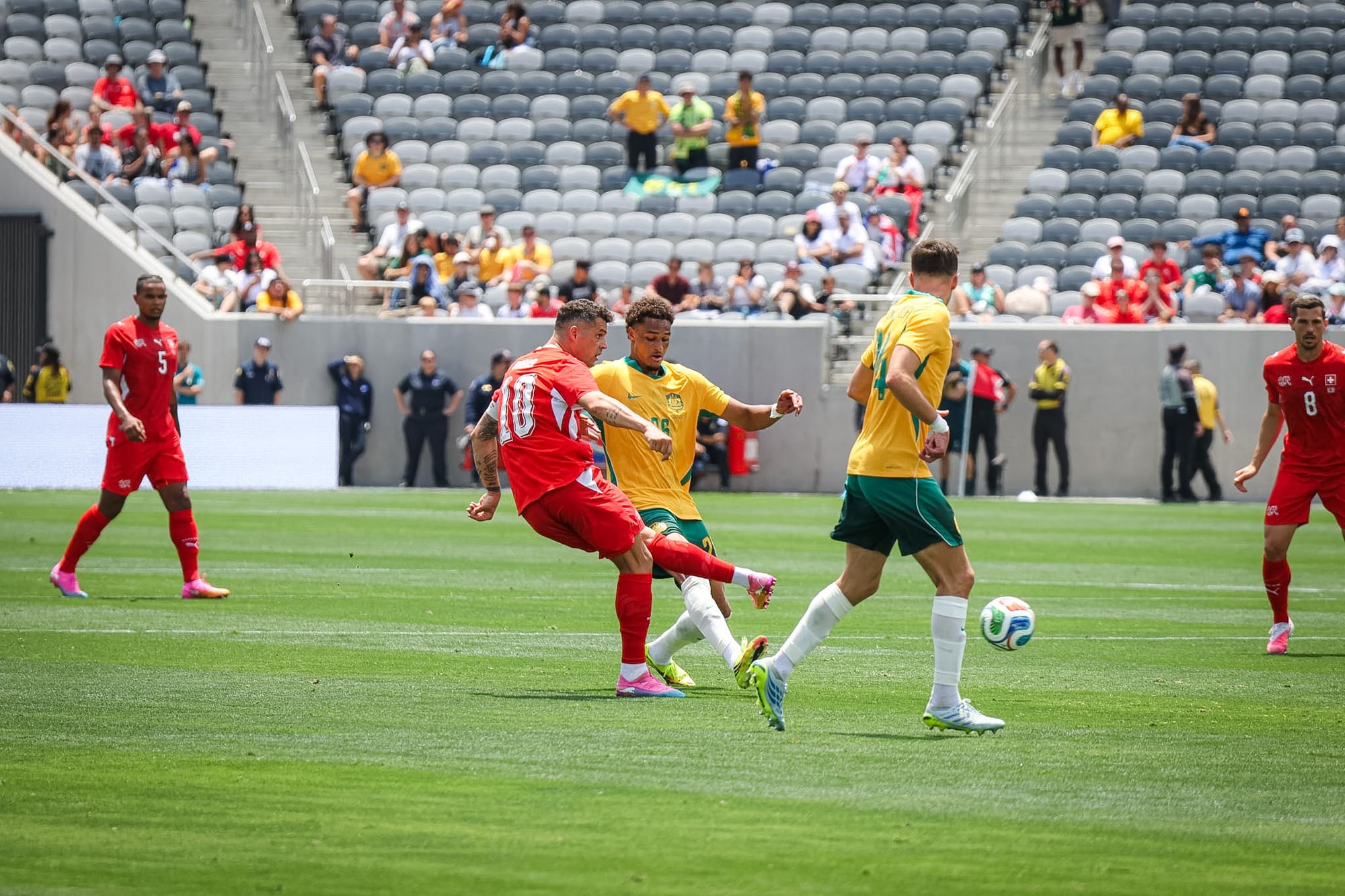
A few minutes later, Granit Xhaka delivered a gorgeous pass from deep inside his own half, perfectly timing Ndoye's run behind the defense. The winger calmly poked his finish beyond Beach to give Switzerland a deserved 1-0 lead.
Pinpoint from Granit Xhaka to set up Switzerland’s opening goal 🎯
— Paramount+ Australia (@ParamountPlusAU) June 6, 2026
The Sunderland midfielder finds Dan Ndoye with a perfect pass, as the forward makes no mistake from close range🇨🇭
Watch #SUIvAUS live and exclusive on Paramount+ 📺 pic.twitter.com/Fyt3Yp9QhU
Australia's response mostly consisted of Irankunda trying to outrun everyone on the field while his teammates struggled to connect two consecutive passes.
Twenty minutes in, Switzerland controlled roughly three-quarters of possession. Australia could not hold onto the ball long enough to build attacks, while Switzerland's press suffocated nearly every passing lane.
The first drinks break may have been the best thing that happened to the Socceroos all afternoon.
Head coach Tony Popovic appeared to urge his side to press higher and play more directly. Australia immediately looked more organized afterward. They still were not exactly carving Switzerland open, but at least they were entering the same zip code as the attacking third.
Manuel Akanji picked up the game's first yellow card after flattening Irankunda on one of Australia's more promising counters. The resulting free kick was wasted with a cross into a completely empty penalty area, which honestly summed up Australia's first-half attack better than any statistic could.
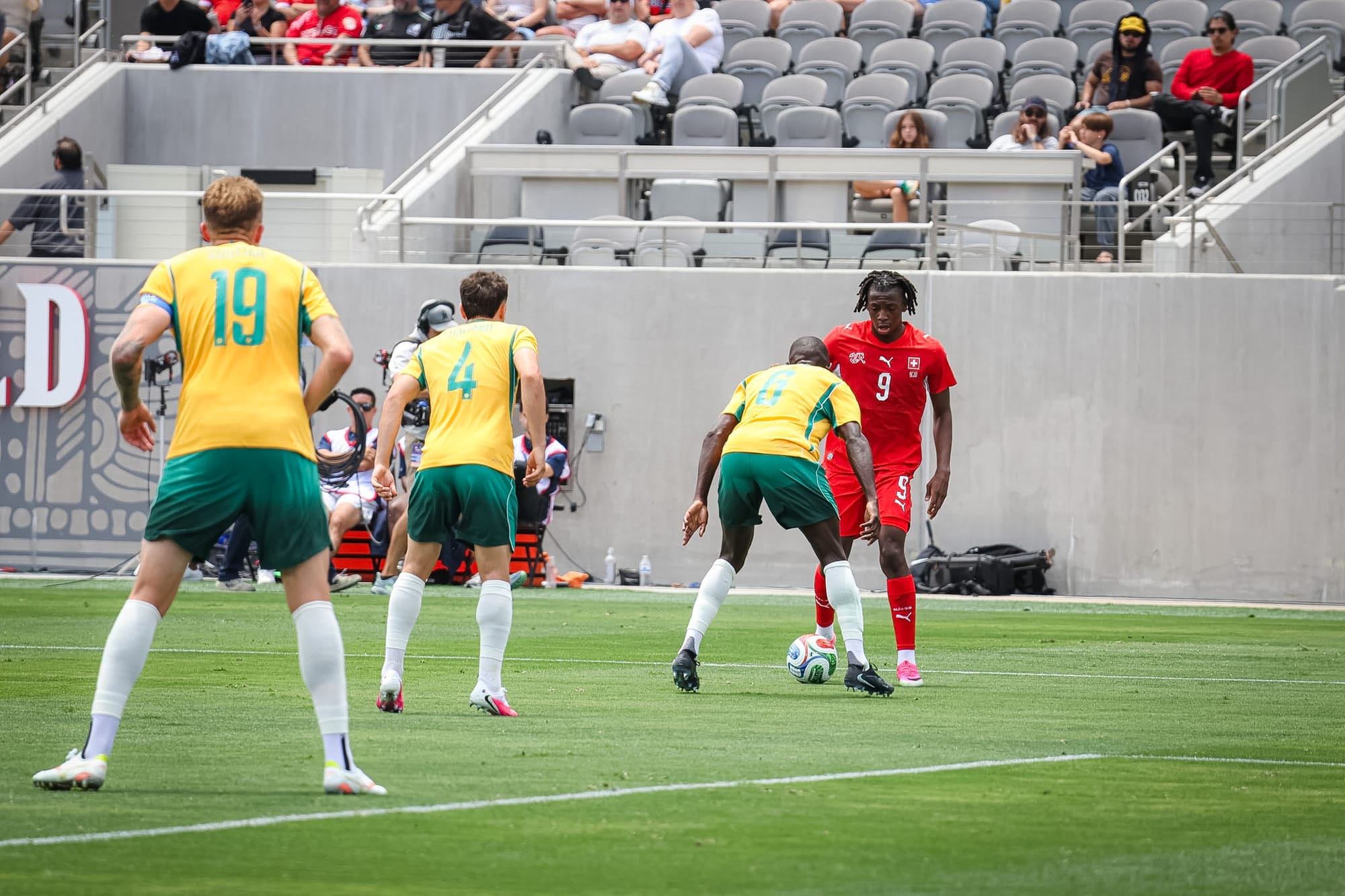
If there was one bright spot, it was Australia's defensive organization. Led by Souttar, the back line remained compact and disciplined. Switzerland dominated possession and territory, but they often needed intricate, almost Rube Goldberg-style passing sequences to generate clear opportunities.
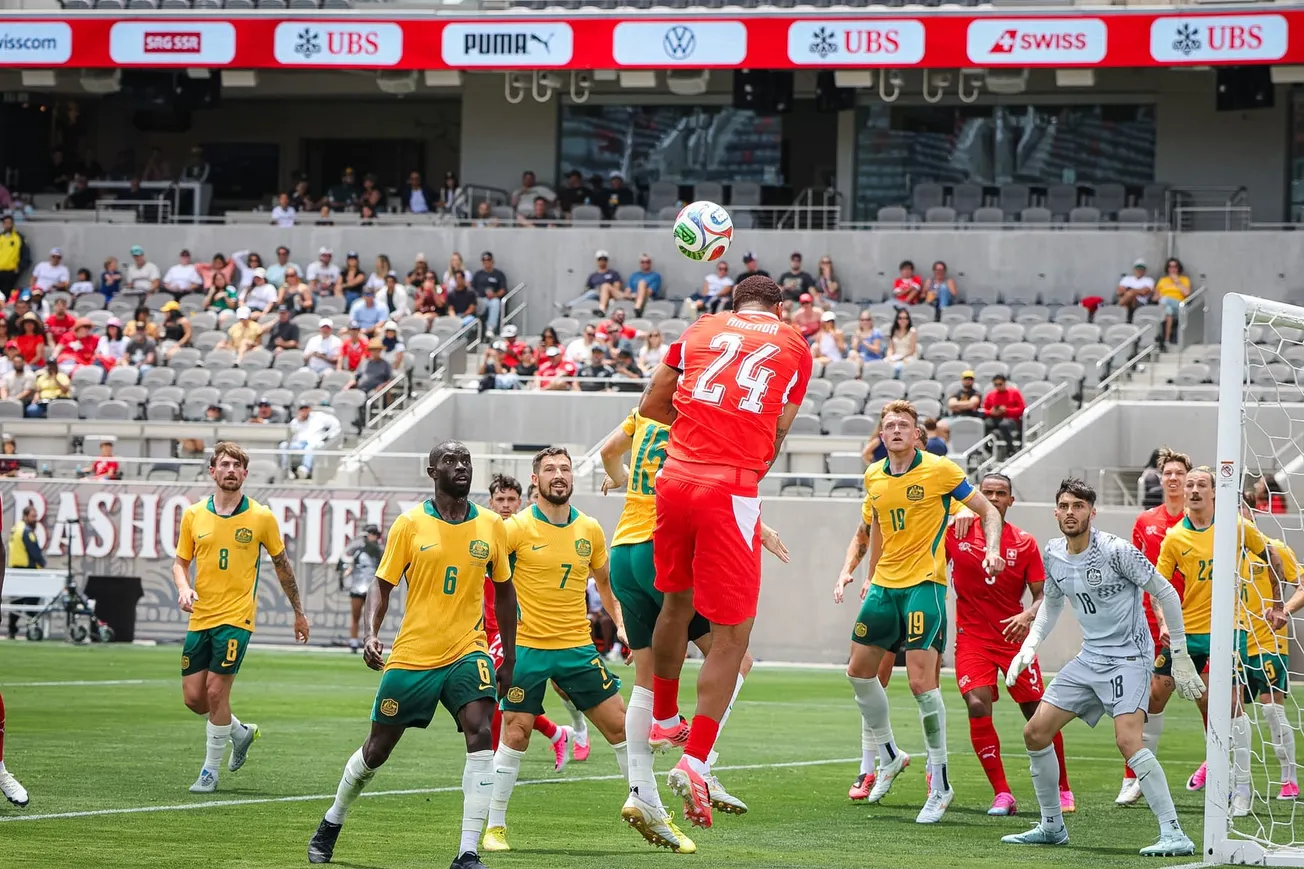
Akanji continued to rely on tactical fouls to halt Australian counters, handing the Socceroos another dangerous free kick late in the half. This time, Australia actually remembered to send runners into the box.
Souttar rose above everyone and powered a header just over the crossbar.
For a moment, Australia's best striker appeared to be its center back.
The half ended with Switzerland deservedly ahead, while Australia looked equally frustrated with both the scoreline and their own inability to create much of anything.
The Second Half
Popovic wasted no time making changes, introducing fresh legs across the field after a first half that probably inspired several strongly worded notes on his clipboard.
The impact was immediate.
Just look what Tete Yengi’s debut CommBank #Socceroos goal meant to the goalscorer and his teammates 💚💛
— CommBank Socceroos (@Socceroos) June 6, 2026
This was the pitchside view of the 25-year-old’s equaliser against Switzerland - on his first appearance for the national team 👏 pic.twitter.com/vGlCwDrT0V
Just minutes after the restart, Irankunda pounced on a loose touch from Switzerland's defense and unleashed an absolute rocket toward the top corner. Kobel reacted brilliantly, tipping the shot onto the crossbar and preserving the lead.
Suddenly, the momentum had flipped.
Switzerland slowed considerably, recycling possession across the back line without the same urgency they displayed in the opening half. Australia, meanwhile, found confidence through simple, direct football.
Sometimes route-one football works.
A long ball from Australia's defense found Connor Metcalfe racing into space behind the Swiss back line. Rather than forcing a shot, he squared the ball across goal, where Tete Yengi arrived to tap home his first international goal and level the match.
The equalizer seemed to remind Switzerland that this was, in fact, a competitive soccer game.
Johan Manzambi and Zeki Amdouni immediately increased the pressure down the left flank, trying to pull Australia's disciplined defensive shape apart. Several dangerous crosses followed, but Australia's defenders continued to clear their lines.
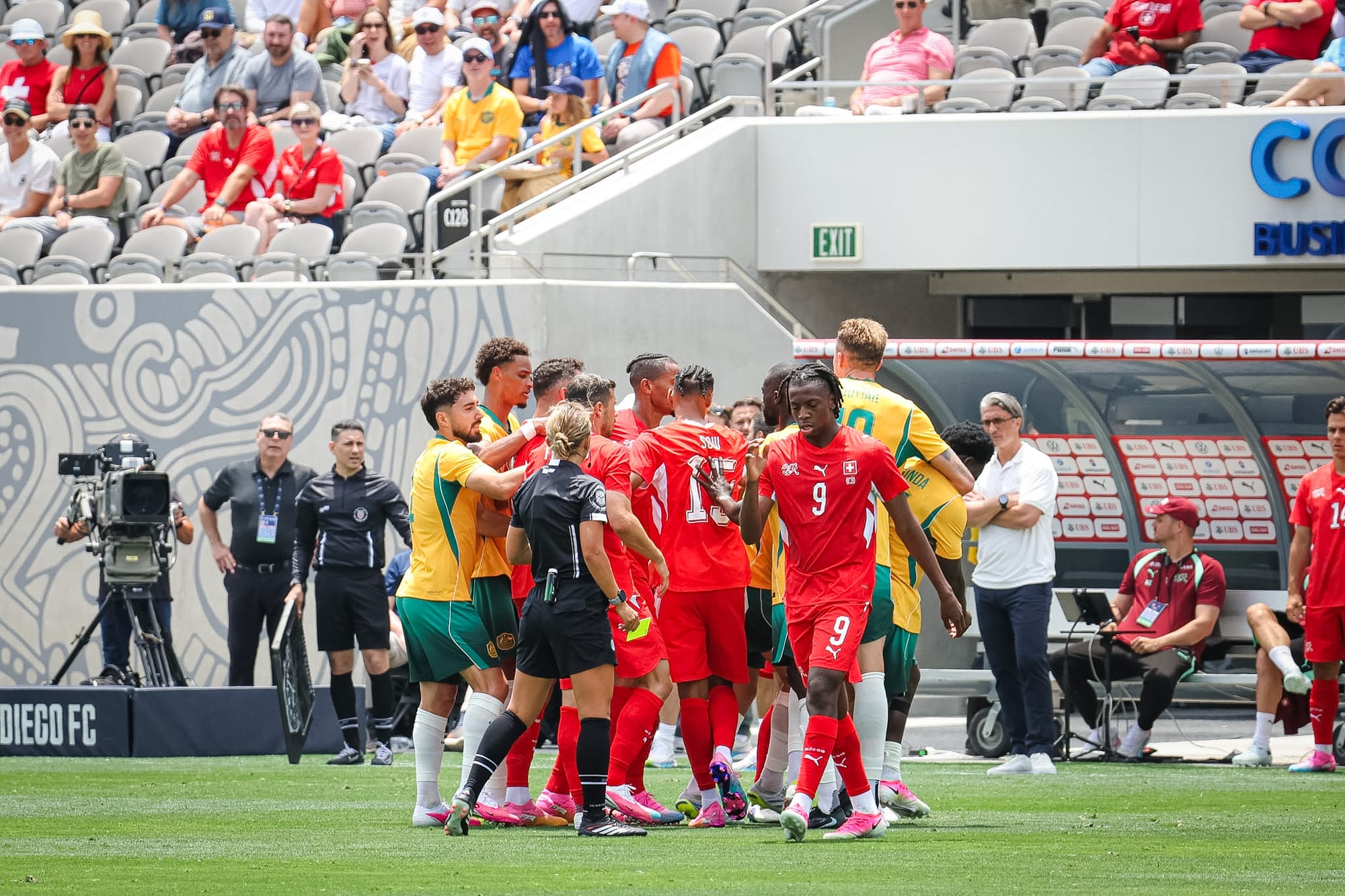
The tension finally boiled over midway through the half when Jacob Italiano crashed into Xhaka, sending players from both teams rushing into the confrontation. The second hydration break arrived at the perfect time to cool things down.
Both managers used the opportunity to empty their benches.
Switzerland's substitutes injected fresh energy, attacking the wings and forcing a series of corners during the closing stages. Cedric Itten came closest to finding a winner, heading narrowly over the crossbar on two separate occasions.
By the final ten minutes, every outfield player on both teams had been substituted except for the two goalkeepers. It was a clear reminder that preserving legs for the World Cup mattered more than chasing a late winner.
After a sluggish first half and a far more entertaining second, the teams settled for a 1-1 draw.
What USMNT Fans Should Take Away
The United States should not overlook Australia.
The Socceroos have very real weaknesses. They struggled badly against Switzerland's press, frequently gave possession away under minimal pressure, and often looked short on creativity when forced to break down a settled defense. If they fall behind, they can become predictable, relying heavily on long balls and individual moments.
At the same time, they are exactly the kind of team that can make a group-stage match ugly.
Australia defends with discipline, protects the middle of the field well, and boasts significant size on set pieces thanks to players like Harry Souttar and Tete Yengi. They are comfortable absorbing pressure and waiting for a mistake, and once they found their rhythm in the second half, they showed they can punish teams that get careless.
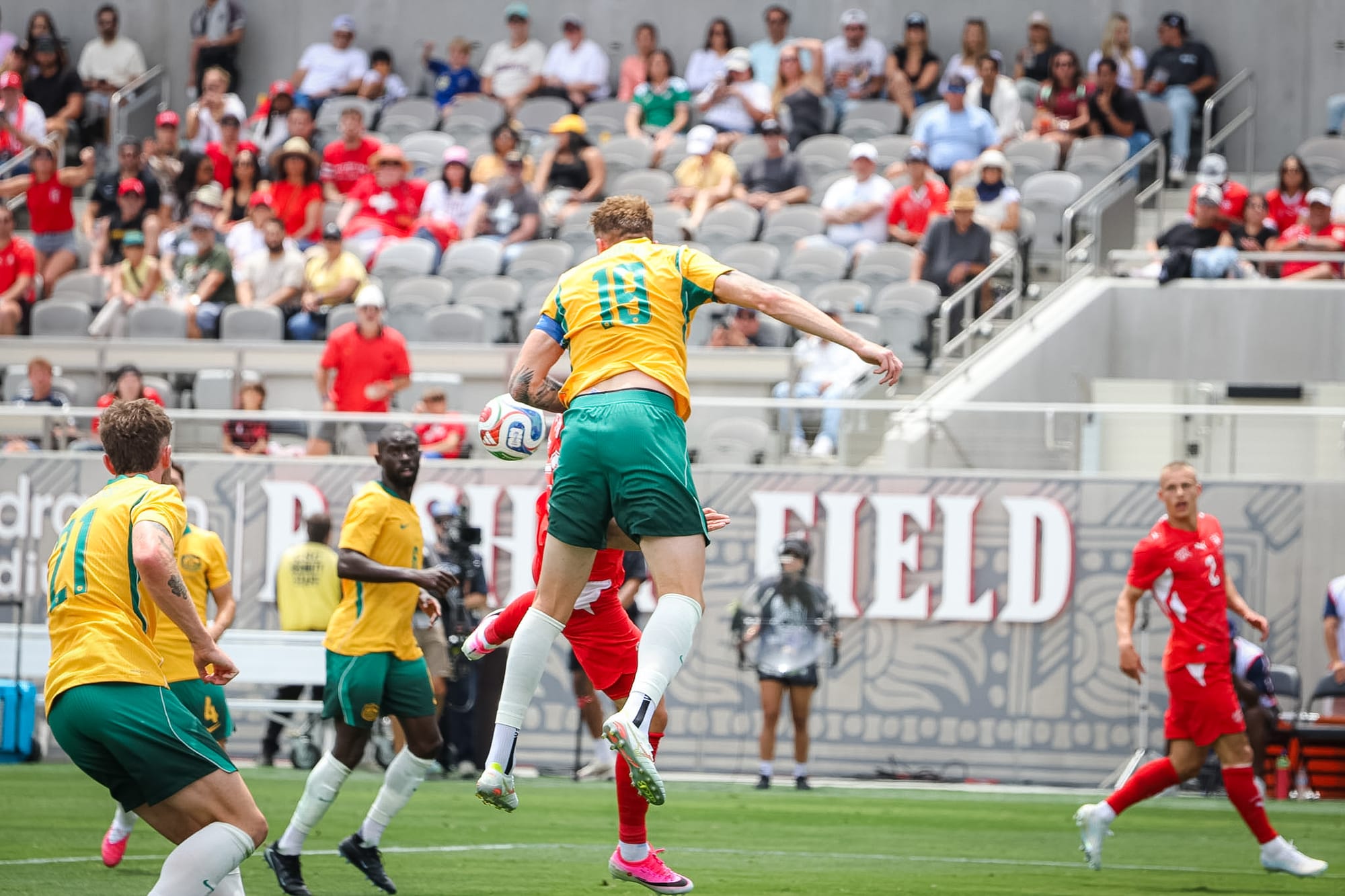
One player who stood out was Nestory Irankunda. Australia struggled to build through possession for much of the afternoon, but Irankunda's pace and willingness to attack defenders gave the Swiss problems whenever he found space. His thunderous second-half effort that forced Gregor Kobel into a spectacular save was one of the best chances of the match, and his relentless pressing created several dangerous moments. Even when Australia's attack looked disjointed, Irankunda always felt one touch away from changing the game.
Switzerland may have controlled most of this friendly, but Australia's resilience was on full display. They survived one dreadful half of soccer, found a way back into the match, and nearly stole it late.
For the USMNT, that should be enough to command respect. Just maybe don't let Harry Souttar wander into the penalty area for a free kick, and don't give Irankunda room to run at defenders in transition. Australia may not create many chances, but those two can make the few they get count.